Can dogs read your facial expressions? It depends on your mood
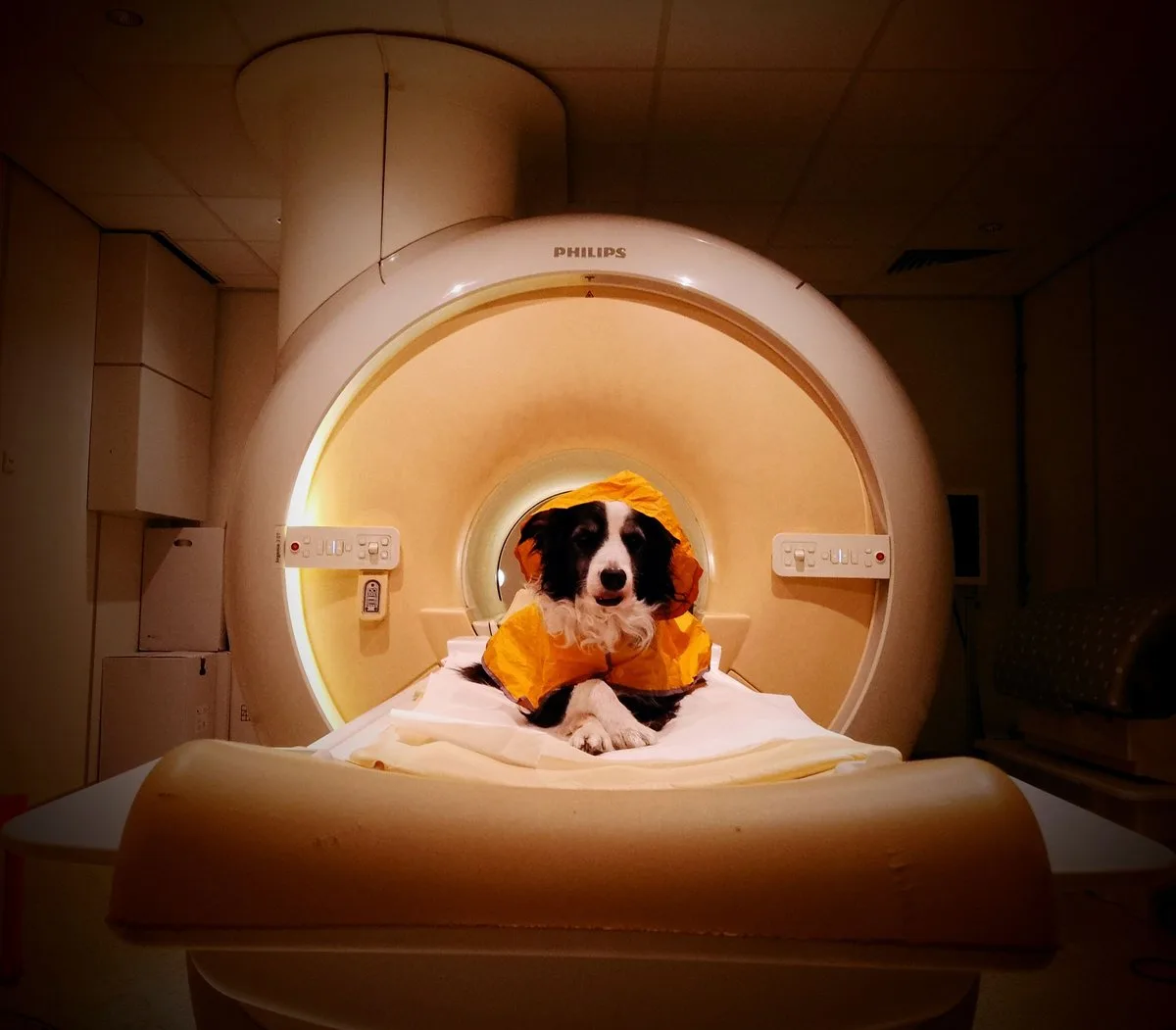
Dogs are known to recognize and respond to human facial expressions, but a new study shows how deeply they understand our mood
Dogs really do know when their owners think they have been a good boy or a naughty pup. Our canine companions can recognize and tell the difference between human facial expressions—and their brains get particularly active when people look happy, a new study shows.
Researchers scanned dogs’ brains while the pooches looked at images of human facial expressions depicting happiness, sadness, anger and fear. Different facial expressions—particularly happiness—sparked distinct activity in different parts of the brain, suggesting that, at the neurobiological level, dogs can read a range of emotions on our faces.
In one experiment, the researchers trained eight dogs to sit completely still—not moving more than three millimeters—for several minutes in a functional magnetic resonance imaging (fMRI) machine, all while the dogs wore headphones to protect their ears. The researchers then showed the dogs strangers’ faces with either a happy or neutral expression and analyzed their brain activity.
If you're enjoying this article, consider supporting our award-winning journalism by subscribing . By purchasing a subscription you are helping to ensure the future of impactful stories about the discoveries and ideas shaping our world today.
Distinct parts of the dogs’ brains lit up when they looked at happy faces, and these areas included the caudate nucleus , a region that is thought to be involved in reward processing, says Laura Cuaya, the paper’s senior author and a postdoctoral researcher at the University of Vienna. The same region lights up when a dog smells a familiar person or anticipates a treat, she adds.
Next, the researchers homed in on whether this region of the dog brain is involved in processing happiness or simply all emotions.
In a second experiment involving 12 dogs, Cuaya and her colleagues showed the canines a mix of faces expressing happiness, sadness, anger and fear. The dogs showed a stronger response to happiness compared with other emotions. The researchers also detected differences in the brain activity associated with faces showing fear versus anger or sadness.
“For the first time—and this was exciting—we found this distinction in the dog brain between two negative emotions,” Cuaya says. Interestingly, the team did not detect a difference in brain activity between anger and sadness. It’s unclear why.
“This novel, ground-breaking study demonstrates that the dog brain does not just differentiate emotional valence, such as positive versus negative or good versus bad emotions, but can also process differently between at least some emotion categories, for example, fearful versus angry, much like the human brain does,” says Kun Guo, a professor of cognitive neuroscience at the University of Lincoln in England, who was not involved in the study.
The findings are likely no surprise to dog owners—and they fit with the fact that we’ve evolved and lived alongside dogs for perhaps tens of thousands of years.
5News aggregated this summary from the outlet’s public feed. The full article, with all the context, is on www.scientificamerican.com — the content belongs to Scientific American.