S’THEMBISO MSOMI | August 9 significant, but should not eclipse other women protests
In the run-up to the 70 th anniversary of the historic 1956 women’s march on the Union Buildings, colleague Phillip Kgaphola was searching through Arena Holdings’ archives in search for unique images that would accompany stories written about the day.
As the parent company of the Sowetan, Sunday Times, Business Day and several other publications, some of which – like the Rand Daily Mail – are now defunct, Arena has a rich archive of South African and international history.
And there is no one better knowledgeable than the venerated Kgaphola to help mine the archives for its riches.
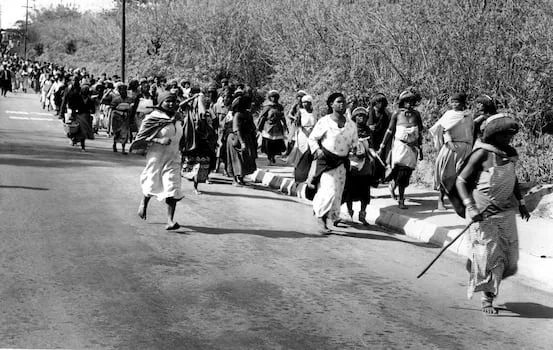
As he dug through, Kgaphola came across this one picture that seemed to be out of place. There was no Union Buildings in the background with throngs of women from across the colour line demanding to see then prime minister JG Strijdom, who, according to liberation Struggle folklore, had long escaped through a narrow window in fear.
No banners of the Federation of South African Women (Fedsaw) and the ANC Women’s League (ANCWL). No Lillian Ngoyi, Helen Joseph, Rahima Moosa, Sophie Williams-de Bruyn or any of the other heroic women leaders who had taken the battle against pass laws to the very seat of apartheid power.
Instead, in this black and white picture, what you see is a group of “ordinary” women marching down a street. From the way they dressed, some are what white racist bosses at the time referred to as “kitchen girls” or “Janes”, while others appear to be farm labourers.
On further inquiry, it transpired that the picture was taken some three years after the famous women’s march. It was taken in a small and semi-rural town of Umzinto, on the south coast of what we now know as KwaZulu-Natal.
According to a Rand Daily Mail report accompanying the picture, the women were marching to the local magistrate’s court demanding that they be allowed to move around without having to carry the hated reference books, also known as dompass , and that each be paid a minimum wage of 1 pound a day.
The women also demanded the lifting of apartheid restrictions that meant they could not seek for jobs in Durban and other towns outside of the Umzinto area.
5News aggregated this summary from the outlet’s public feed. The full article, with all the context, is on www.sowetanlive.co.za — the content belongs to Sowetan.