THE CONVERSATION: Can ‘knees over toes’ exercises help bullet proof your knees? Two experts explain
Knees over toes exercises can strengthen and “bullet‑proof” knees when progressed gradually — they load muscle, bone and cartilage, without damage if increased sensibly.
For decades, people exercising have been told one simple rule: never let your knees go over your toes. During lunges, squats and many other exercises, well-meaning coaches, trainers and physiotherapists repeated this advice so often it became fitness folklore.
More recently, however, social media has pushed back. Popularised by fitness influencer Ben Patrick – better known as the “Knees Over Toes Guy” – millions have embraced a training style that focuses on building lower limb strength. Among the tenets is the idea that letting your knees travel further forward is a key part of “bullet proofing” your knees.
So who’s right? Like most health and fitness debates, the answer lies somewhere in the middle. It’s not about whether your knees move forward beyond your toes, but what happens when they do.
In everyday life, your knees move well beyond your toes all the time. Think about walking downstairs, crouching down to play with kids, and kneeling in the garden.
Imagine doing a squat. As your knees bend further, your thigh muscles work harder to stop your knees from collapsing to the floor. This extra muscle tension increases the force between your kneecap and thigh bone – what we call joint loading.
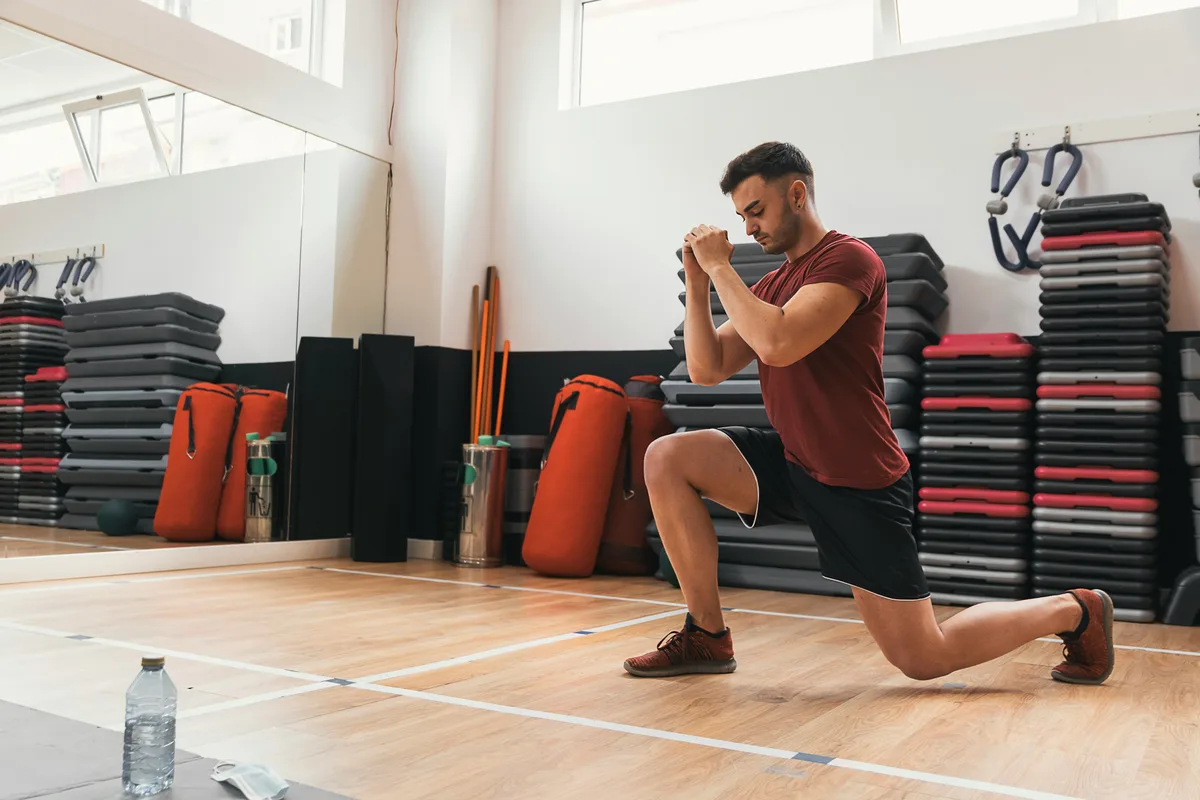
Now think of exercises like the knees over toes split squat , which look a bit like this .
This movement deliberately allows the knees to travel further forward, increasing this joint loading compared to shallower squats. For some people, this can be painful. For most, however, loading your knees like this is normal and perhaps even a good thing.
Your bones, muscles and articular cartilage (the lining that covers the end of your bones that makes joint movement smooth) are living tissues that need loading to stay healthy . In this context, loading means making them bear weight.
Weight bearing exercise – such as lifting weights – is one of the best ways to keep bones strong (and prevent osteoporosis).
The opposite happens in space, where astronauts rapidly lose bone and muscle because their bodies are no longer exposed to gravity. On Earth, bedrest results in similar changes. Our bodies, including our knees, were designed to be used.
The “knees over toes” approach hasn’t yet been well scientifically tested, so we don’t know whether it performs better than other well-designed strength programs.
However, many of the exercises it promotes, such as split squats and deep squats, have been used for decades. The branding is new, the movement principles are not.
Many of these exercises deliberately bend the knee through a larger range of motion, increasing the work done by your thigh muscles. This may promote greater muscle growth and strength than shallower exercises. Strength training also improves bone health and helps maintain healthy cartilage .
5News aggregated this summary from the outlet’s public feed. The full article, with all the context, is on www.dailymaverick.co.za — the content belongs to Daily Maverick.