Sea Harvest’s first-half earnings rise despite headwinds
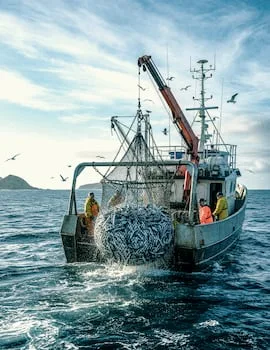
Sea Harvest has reported higher first-half earnings amid strong demand and despite one of the weakest pelagic fishing seasons on record.
The fishing group reported a 13% increase in headline earnings from continuing operations for the six months to end June to R320.1m. Profit after tax was 10% higher at R308.8m.
Headline earnings per share grew 14% to 987c and an interim dividend of 24c per share was declared.
The group said it leveraged double-digit price increases, efficiencies and disciplined cost control to mitigate significant headwinds.
These included one of the weakest pelagic fishing seasons on record, a ban on fish trawling in the Pilbara in Australia, a stronger exchange rate, lower hake total allowable catch (TAC), and material increase in the fuel price, it said. Pelagic fishing means targeting fish that live in the open water column, rather than near the sea floor or close to the coast.
Despite these factors, improved local pilchard catches, record fishmeal and fish oil prices, and a much-improved performance in the aquaculture segment resulted in higher earnings.
The group’s debt fell by R560m to R1.66bn after Sea Harvest used the proceeds of the disposal of Ladismith to Fairfield Dairy to reduce debt.
Group revenue from continuing operations decreased by 6% to R3.3bn as double-digit price increases across all businesses were offset by lower sales volumes in the Pelagic and Australian businesses and a 3% stronger exchange rate.
Sea Harvest Hake’s revenue increased by 7% to R2.1bn, with the 4% lower sales volumes and the stronger exchange rate offset by strong global demand for sustainable whitefish, resulting in sales prices increasing by 14% in real terms.
Sea Harvest Pelagic experienced one of the weakest industrial (anchovy) fishing seasons on record, resulting in fishmeal and fish oil sales volumes declining by 53%.
“The business was therefore unable to take full advantage of significantly higher fishmeal and fish oil prices, the result of the persistent El Niño conditions that have severely curtailed global production,” it said. Segment revenue decreased by 19% to R711m.
The Aquaculture business narrowed its loss before interest and tax significantly as a result of product and market diversification efforts driving higher pricing, complemented by the cost reduction initiatives implemented since 2024. Segment revenue decreased by 18% to R136m.
The Australian business was materially impacted by lower volumes as a result of the Pilbara fish trawl ban and a later start to the prawn fishing seasons in Shark Bay and Exmouth.
Tropical cyclone Narelle hit Exmouth in February, causing extensive damage to the fleet, with one vessel written off, and land-based infrastructure which caused delays.
5News aggregated this summary from the outlet’s public feed. The full article, with all the context, is on www.businesslive.co.za — the content belongs to Business Day.