Gwarube expands mother-tongue learning, expert warns of challenges
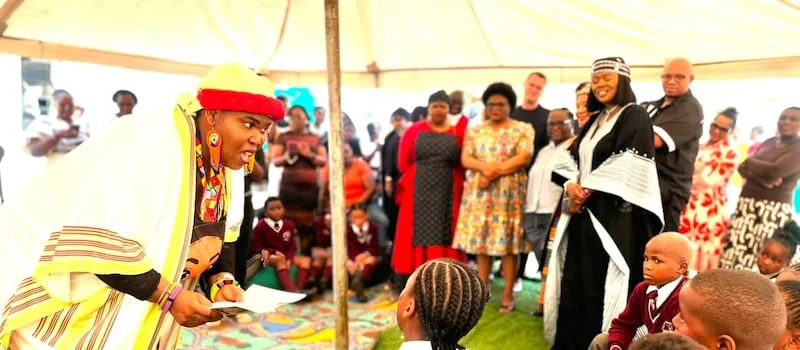
As Heritage Day celebrates South Africa’s cultural and linguistic diversity, grade 5 pupils will be included in the mother-tongue-based bilingual education programme this year while the department of basic education looks to strengthen literacy and help children better understand what they read.
The expansion comes amid concerns about poor reading outcomes, with the 2021 Progress in International Reading Literacy Study finding 81% of grade 4 pupils cannot read for meaning.
Basic education minister Siviwe Gwarube said pupils whose home language differs from the language of teaching and learning at school tend to perform worse than those taught in a language they speak at home.
The department’s mother-tongue-based bilingual education (MTBBE) programme is being expanded beyond grade 3, allowing pupils to continue learning selected subjects in their home languages while developing their English skills.
“Implementing mother-tongue education across the system would require significant resources,” Gwarube said.
She said the rollout, alongside efforts to strengthen the foundations of learning, was aimed at improving performance, particularly among children from poorer communities.
“A system level change of this magnitude is a massive undertaking and will take significant resources to fulfil. The department must make the right investments and ensure MTBBE is supported,” she said.
The department is investing R10bn to expand access to early childhood development (ECD), as the ECD child subsidy has increased by 41%, from R17 to R24 per child per day.
“The Outcome-Based Education Fund, launched last year, will invest R496m to create 115,000 additional ECD spaces in some of the country’s most rural provinces,” Gwarube said.
She said in 2026 the department will train 10,000 foundation phase teachers in literacy and numeracy interventions.
“A system level change of this magnitude is a massive undertaking and will take significant resources to fulfil. The department must make the right investments and ensure MTBBE is supported.”
Education specialist Prof Kobus Maree said learning to read in a child’s home language could support later reading ability in English, but only if the programme was well developed and the teaching effective.
“The crucial matter is not simply the question which language is being used, but more importantly how effectively is reading taught in that specific language,” he said.
Maree said research showed literacy skills developed in an African language could help predict later English reading ability.
5News aggregated this summary from the outlet’s public feed. The full article, with all the context, is on www.timeslive.co.za — the content belongs to TimesLIVE News.