Is NZ’s foreign policy ‘realism’ working? Why the next government faces a real choice
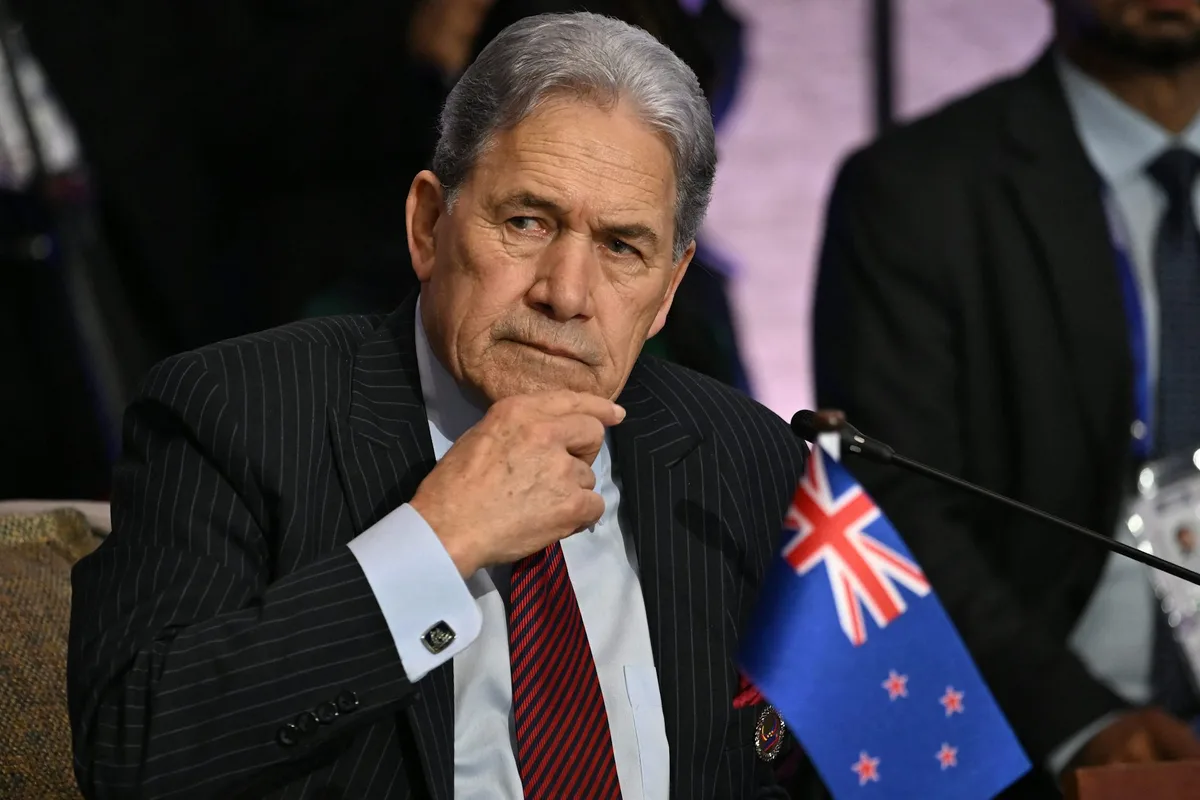
Brendan Smialowski/AFP via Getty Images The 2026 general election is taking place as the world experiences a tumultuous transition.
Russia is sustaining a brutal effort to annex Ukraine, the Israel-Palestine conflict has devastated Gaza and the West Bank, China’s Pacific presence is growing, the United States is ensnared in a war with Iran, and the tempo of climate change is quickening.
With the core principles of an independent New Zealand foreign policy – support for a rules-based international order and multilateralism – under sustained attack, Foreign Minister Winston Peters recently reflected on his government’s response during the past three years.
He told the Institute of International Affairs the country had faced “the worst international conditions since 1945”.
The challenges it faced included the “return of trade protectionism”, a United Nations hamstrung by the “abuse of the Security Council veto”, and “unwelcome geopolitical manoeuvring in the Pacific”.
The “order-shattering nature of the geostrategic environment”, Peters said, marked a shift “from rules to power”.
Consequently, the National-led coalition had opted for “quiet diplomacy” and realism based on accepting “the world as it is, not how we wish it would be”.
This realism, Peters claimed, has “left the next government with more choices, and with more agency” and had prudently served “our country’s national interests”.
But there are substantial reasons to be sceptical about this diagnosis of the contemporary global environment.
Selective realism The geopolitical rivalries of the 21st century are simply not comparable to those of the Cold War era when the world teetered on the brink of nuclear war on at least three occasions (during the 1962 Cuban missile crisis, the 1973 Yom Kippur war, and NATO’s Able Archer incident in 1983).
The shift from rules to power has been largely confined to three veto-wielding permanent members of the UN Security Council – the US, Russia and China – and their close allies.
Meanwhile, the majority of states are small and middle powers that depend on, and largely adhere to, international rules governing areas such as trade, diplomacy, tourism and scientific collaboration.
And while the government has identified some of the symptoms of global instability, it has been somewhat selective in assigning responsibility to those creating those conditions.
In his speech to the Institute of International Affairs, Peters rightly expressed concern about “Russia’s illegal invasion of Ukraine” and China’s naval exercises and missile tests in the Pacific.
5News aggregated this summary from the outlet’s public feed. The full article, with all the context, is on theconversation.com — the content belongs to The Conversation Australia.