Science that makes you laugh? Canadian engineers win Ig Nobel Technology Prize for 3D ‘necroprinting’ with mosquitoes
The 2026 Ig Nobel Prize winners included a study of the aerodynamics of nose blowing, and a study finding that upper class people are more likely to snatch from a children’s supply of candy. (Unsplash/Zyanya Citlalli) Our research at McGill University recently won the 2026 Ig Nobel Technology Prize for demonstrating how mosquitoes can be used for high-resolution 3D printing.
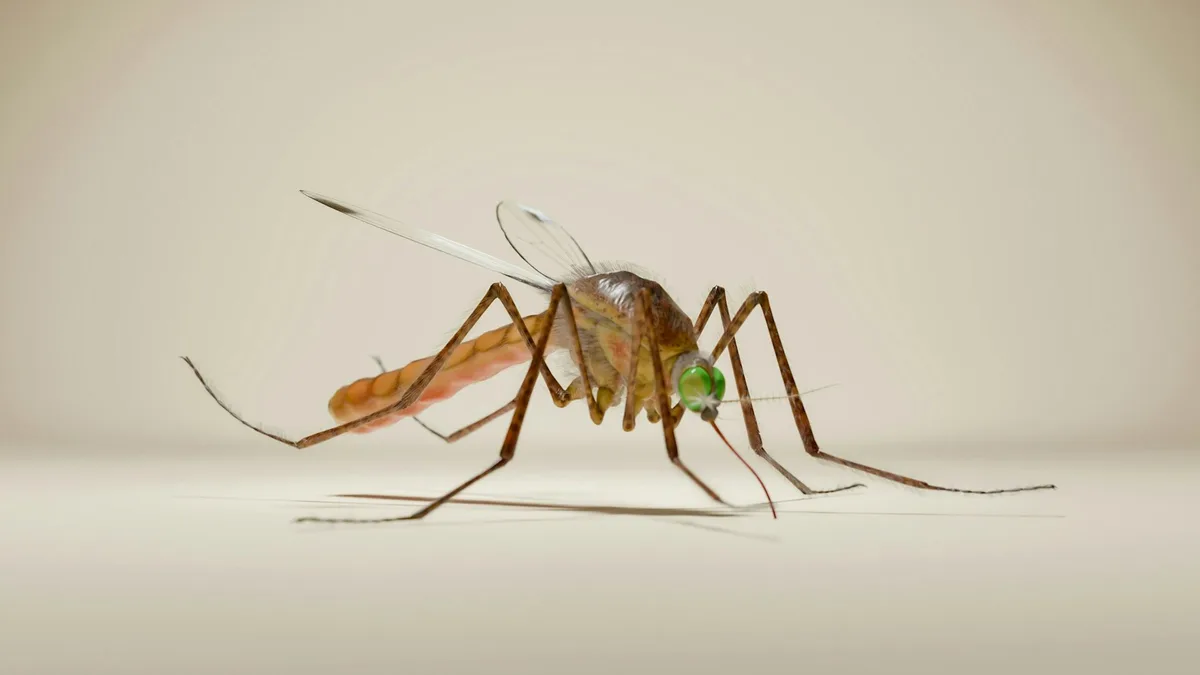
The work repurposes deceased mosquitoes by carefully extracting their mouthpieces — or, as we say in scientific terms, their “proboscides” — and mounting them to a 3D printing system.
There they serve as fluid deposition nozzles, in a manufacturing process we have named “3D necroprinting.” We can use them to print very small and precise structures that are otherwise very difficult and expensive to produce.
A prize for funny science The Ig Nobel Prize is awarded to research around the globe that first makes people laugh — and then makes people think.
Founded by Marc Abrahams in 1991, it’s mission is simple: to reveal that scientific research stemming from the most improbable corners of the human mind can lead to worthwhile discoveries.
Each year, around 9,000 projects are nominated and one prize is awarded in each of 10 categories.
This year, the categories were: biomechanics, economics, chemistry, medicine, biology, physics, technology, olfaction, peace and soil science.
The prizes are usually handed out by Nobel laureates in a gala event at either Harvard University, Massachusetts Institute of Technology (MIT) or Boston University.
This year, in a break from tradition, we received our award in Zürich, Switzerland, while showered by the audience with paper airplanes.
Mosquitoes are organic, cheap, consistent Why have we turned to dismantling mosquito corpses for manufacturing use? The answer is simple: Why break your head redesigning and manufacturing something when Mother Nature is offering you a pre-made solution, perfected over millions of generations? The mosquito proboscis is a tiny, naturally evolved microneedle about half the width of a human hair.
From a manufacturing perspective, fabricating such small needles to use as 3D printing nozzles has its challenges.
Commercial micro-nozzles below 100 microns in size are expensive, at around $80 each. (One micron is 0.001 millimetres, so these are small.) Glass-based needles, while they can reach these smaller diameters, are difficult to manufacture consistently and are extremely brittle.
Another concern with traditionally engineered alternatives is that these nozzles are made of non-organic, non-biodegradable materials.
The mosquito proboscis, however, is 100 per cent organic material.
5News aggregated this summary from the outlet’s public feed. The full article, with all the context, is on theconversation.com — the content belongs to The Conversation Canada.