Cave sanctuary in Spain has highest number of Latin inscriptions anywhere in the Roman Empire — and many of them mention mysterious 'Lady'
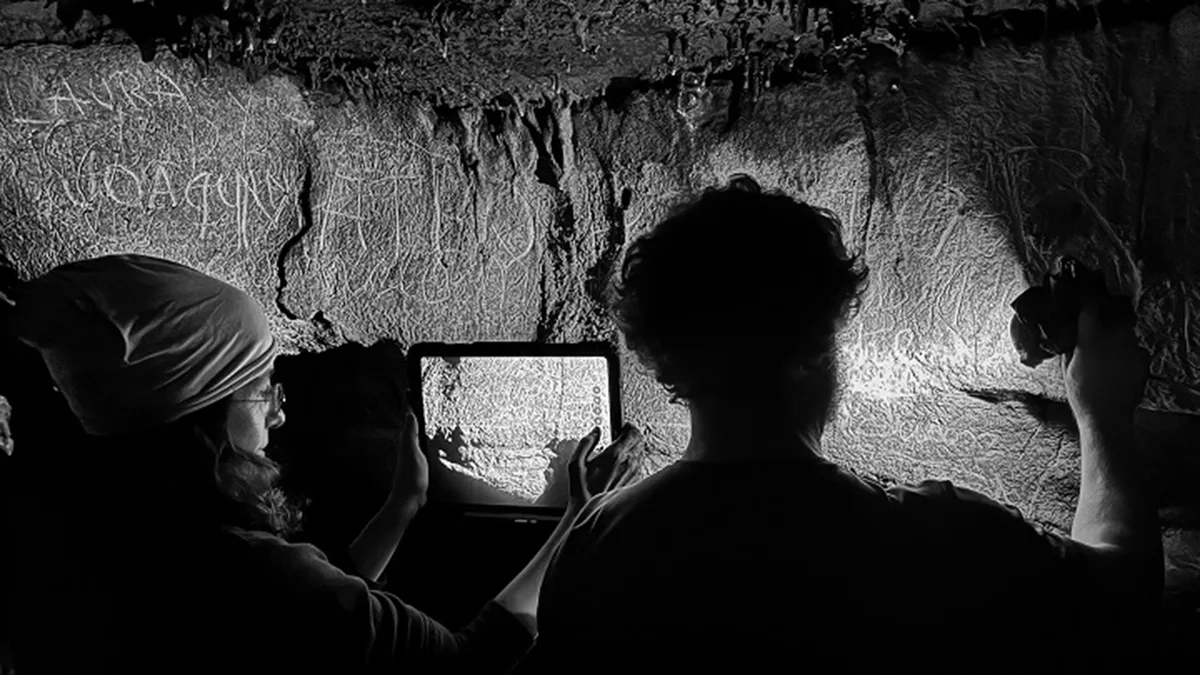
A cave in eastern Spain is revealing new clues about the ritual lives of Roman women, after archaeologists documented more than 120 Latin inscriptions — the highest number known anywhere in the Roman Empire — at an underground sanctuary.
Five of the inscriptions mention a previously unknown goddess referred to simply as "the Lady." Researchers unearthed the inscriptions during a 2026 excavation at Cova de les Dones (Cave of the Women), near Valencia on Spain's east coast.
The discovery significantly expands the number of known writings from the site from 15 initially documented in 2024.
The inscriptions mostly date to the first and second centuries A.D. and were found on the walls and ceilings of a deep cave chamber, which the researchers call the " Roman Sanctuary ." "The fact that the texts are concentrated in a specific and delimited area of the cave, away from the entrance, confirms that it is an organized cult," Sergio García-Dils , an archaeologist and speleologist at the Seville National University of Distance Education in Spain, said in a translated statement .
The researchers think the cave hosted a dedicated cult centered on a mysterious goddess whom worshippers called Domina, meaning "the Lady." Who is "the Lady"? Two inscriptions in the cave reading "Domina" or "the Lady" (Image credit: University of Alicante) The new inscriptions shed some light on the identity of the mysterious goddess.
Five of the 120 inscriptions refer to Domina, while three of those include the name "Malaci," which may be an epithet for the goddess.
"This goddess had a specific aspect, perhaps related to water, the definitive interpretation of which we are currently working on," Silvia Alfayé , a professor of ancient history at the University of Zaragoza in Spain, said in the statement.
The Roman Sanctuary chamber of the cave features small natural pools, called gours , which collect groundwater.
Visitors appear to have deposited offerings in these pools, but whether these were intended for "the Lady" or for other deities remains a mystery.
Evidence of a goddess-worshipping cult The researchers also found chalice-shaped vessels, two rings, a bracelet, ceramic fragments, plant remains and other archaeological materials in the cave that point to women playing an active role in the cult's rituals.
Several inscriptions contain female names, while archaeologists found numerous spindle whorls associated with textile-making that were often connected with ancient women.
The combination of the inscriptions and artifacts suggests women may have participated directly in ceremonies or offerings at the cave, according to the statement.
5News aggregated this summary from the outlet’s public feed. The full article, with all the context, is on www.livescience.com — the content belongs to Live Science.