Why the right turned on Indian Americans
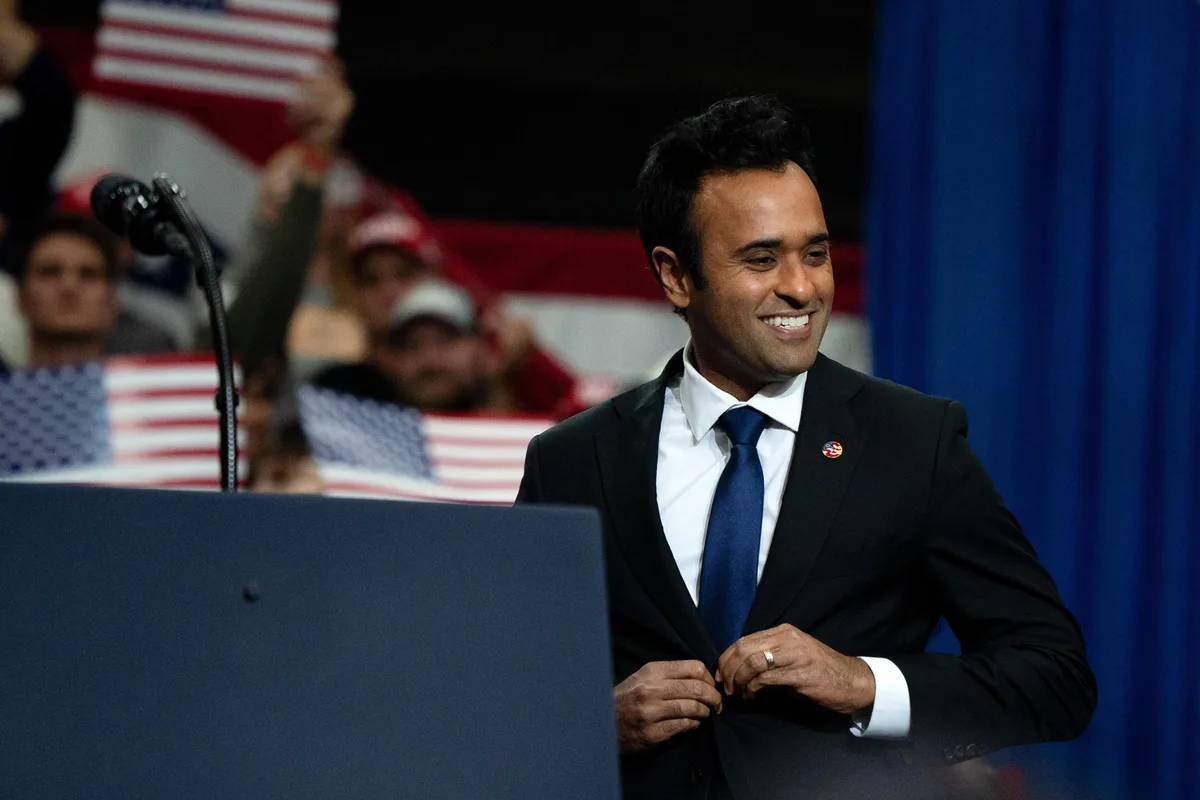
Vivek Ramaswamy, the Republican candidate for governor of Ohio, at a campaign event in Vandalia, Ohio, on October 3, 2026. | Jessica Phelps/Bloomberg via Getty Images In early October, Vivek Ramaswamy, the Republican candidate for governor of Ohio, went for a classic “politician on the stump” move: He picked up a kid.
Or at least he tried to.
Ramaswamy fumbled the boy a bit , producing a clip that quickly went viral on social media.
The next day, Ramaswamy posted a picture of himself with his son in his arms on social media.
It was a cute retort.
But many of the responses were ugly — racist attacks against Ramaswamy that drew on anti-Indian stereotypes.
It was the latest example of a broader shift on the right, where Indian Americans and Indian immigrants have become a conspicuous target of online conservative anger.
“The people who had negative stereotypes about Indians in their mind said, ‘Hey, look, the guy can’t even pick up a kid…he can’t even act like a normal American family man,’” freelance journalist Zaid Jilani told Today, Explained co-host Noel King.
Jilani, who recently wrote about the surge in anti-Indian racism for Vox, joined the podcast for a conversation about how he sees the bigotry as rooted in status envy, how Indian Americans and Indian immigrants are responding, and his surprisingly hopeful outlook for the future.
Below is an excerpt of their conversation, edited for length and clarity.
There’s much more in the full podcast, so listen to Today, Explained wherever you get podcasts, including Apple Podcasts , Pandora , and Spotify .
American racism is very interesting, always has been.
And there is a type that says, immigrants are dirty, they come here, they’re uneducated, they leach off the government, they’re taking our resources.
The stereotype of Indian immigrants to America and Indian Americans is people who go to college, people who often have advanced degrees, people who often live in nice neighborhoods, make good money, are family-values people.
5News aggregated this summary from the outlet’s public feed. The full article, with all the context, is on www.vox.com — the content belongs to Vox.