Two US cities could soon ban one of the world’s most controversial foods
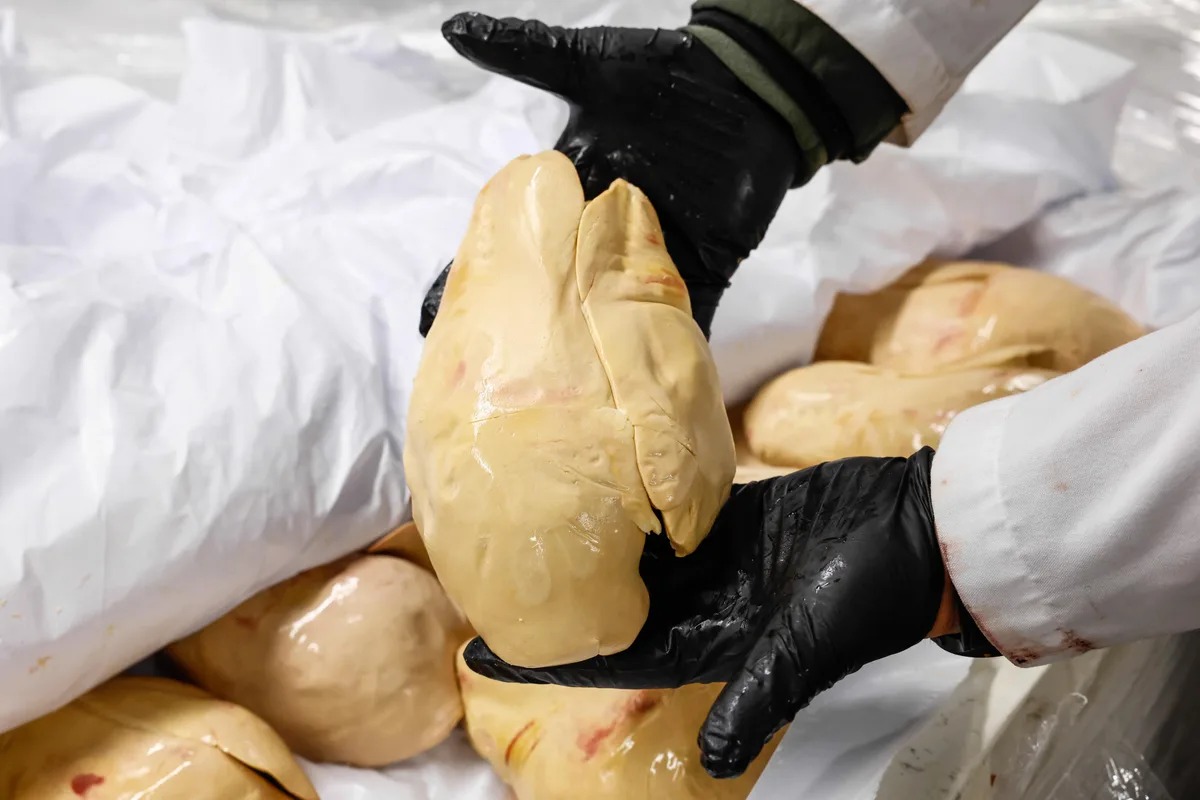
An employee holds fatty duck liver — or foie gras — at Hudson Valley Farms in upstate New York. | Pro-Animal Future In November, voters in Washington, DC, and Denver will cast their ballots to decide whether their cities’ restaurants and grocery stores can continue to sell one of the world’s more controversial foods: foie gras.
French for “fatty liver,” foie gras is made by briefly force-feeding ducks a corn slurry two to three times daily with a metal tube during the final two to three weeks of their lives.
It can make their livers balloon to roughly six to 10 times their natural size.
The farming practice gives the liver its signature rich, buttery taste that made it a French delicacy centuries ago and ever since, a prized menu item at upscale restaurants, particularly in Europe, the United States, and East Asia.
But the apparent cruelty of force-feeding ducks has also long made it the target of those concerned with animal welfare.
While forcing a lot of food through a metal tube into ducks’ throats may not look great, foie gras companies and high-end chefs contend that it doesn’t hurt the animals because — among other reasons — ducks’ unique physiology enables them to eat fish and other animals whole, and that they naturally gorge before migrations. (More on these arguments later).
Whenever the issue is up for a vote, it touches off fierce debates over animal welfare and fine dining.
While foie gras production does harm animals, producers and chefs maintain the dish is unfairly singled out when there are arguably worse practices in animal agriculture, including many that impact a far greater number of animals .
Banning a product largely consumed by the 1 percent might make some voters feel good, while ignoring the animal cruelty embedded in the production of vastly more common products, like chicken and eggs .
But to animal rights advocates, a potential ban in DC — which has more foie gras-serving restaurants than almost anywhere else in the US — represents a unique opportunity to hasten the end of what spokesperson Natalie Fulton of Pro-Animal DC , the group behind the DC ballot measure, calls a “uniquely cruel” practice.
What the science says about force-feeding ducks Foie gras producers often argue that ducks can handle force-feeding just fine because of their long, flexible necks that allow them to swallow fish whole — spines and all — and that they’ve evolved to stuff themselves before seasonal migrations.
Producers also commonly say that they have no gag reflex.
But these claims, according to research, don’t mean that force-feeding is painless.
They also leave out a lot of the other problems in foie gras production.
5News aggregated this summary from the outlet’s public feed. The full article, with all the context, is on www.vox.com — the content belongs to Vox.