Maybe secular liberals can’t save democracy
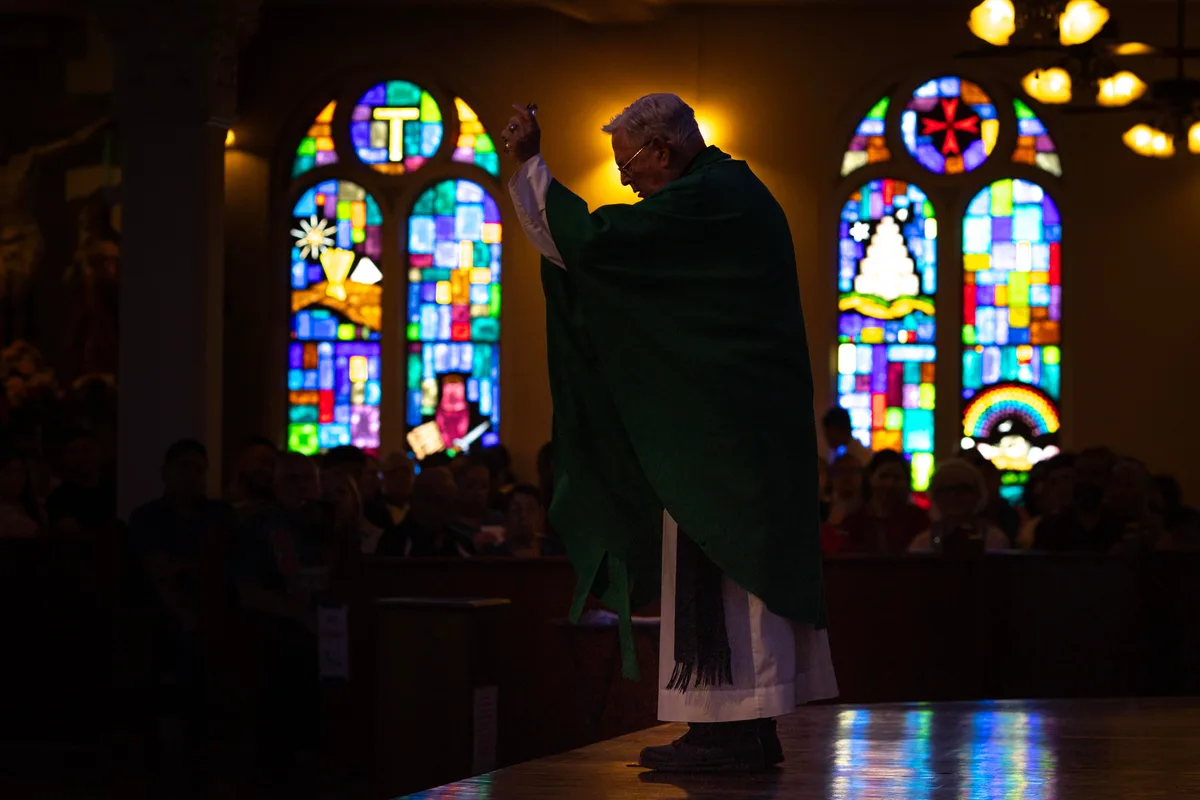
A priest speaks to parishioners during Sunday Catholic Mass inside the Our Lady of Guadalupe Church on August 10, 2025, in Mission, Texas. | Tom Brenner for the Washington Post via Getty Images To the average observer concerned with the future of American democracy, it might be easy to conclude that religion has been part of the problem — particularly over the last few years.
Right-wing religious leaders, including the leading Southern Baptist televangelist Robert Jeffress, have endorsed “ Christian nationalism ”; other evangelical pastors and conservative Catholic intellectuals have been openly pondering if America should become more of a theocracy; Secretary of Defense Pete Hegseth, who once called for an “ American crusade ,” evoking bloody medieval religious campaigns, has referenced Christian theology in statements about the Iran war.
To critics, these examples show that American religion is becoming an active threat to pluralism and tolerance — the ideas that make American democracy work.
But what if the solution to this anti-democratic slide is also religion — more religion than the US currently has? Key takeaways The authors of a new book argue that declining levels of religiosity have worsened polarization, which has led to a backslide in democracy.
To reverse this trend, the authors suggest everyone, but particularly liberals and secular people, engage with religion more and take lessons on debate and disagreement from faith traditions.
For those who do identify as religious already, this would mean participating in organized religion; for those who are not religious, this would mean approaching religion and religious people with more openness and curiosity.
This argument has limitations, but there are signs it is becoming more widespread, including the rise of religious Democrats and the pope’s recent comments.
A new book by two thinkers from opposing ends of the ideological spectrum argues that declining levels of religiosity across the board, but particularly among liberals, have deepened political polarization, which in turn has corroded democratic norms.
Now, they argue, one of the most effective ways for liberals to stand up for democracy is to engage with religious communities and their scriptural traditions with more respect, openness, and curiosity.
The authors also urge liberals who are believers themselves to embrace organized religion and return to it themselves.
Conservative evangelical Christian Matthew Kaemingk and liberal Muslim writer Shadi Hamid argue in Can Religion Save Democracy? that there’s a necessary and unique role that religious institutions and organized religion must play in American public life.
Religion serves a fundamental regulating purpose, tempering emotions, fundamentalism, and nihilism.
5News aggregated this summary from the outlet’s public feed. The full article, with all the context, is on www.vox.com — the content belongs to Vox.