Roman Space Telescope starts waking up as NASA powers on instruments for the 1st time
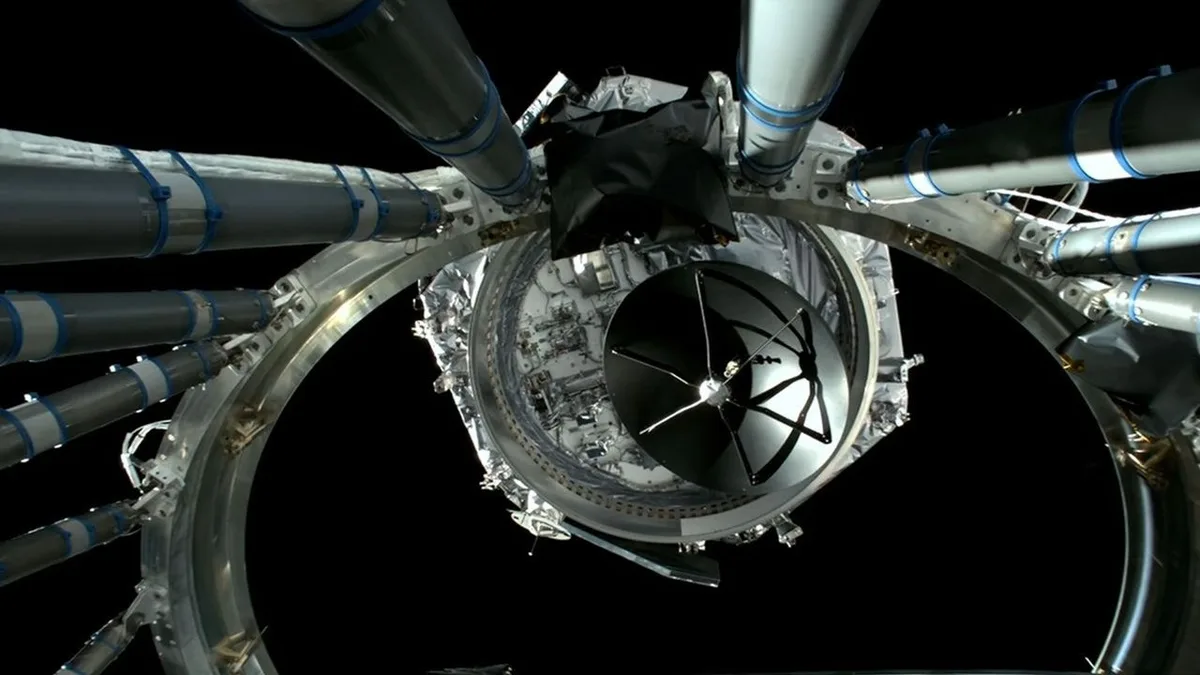
As the newest heavy hitter in orbital observatories continues the journey to its final destination, NASA has begun the process of switching the spacecraft on.
The Nancy Grace Roman Space Telescope launched on Aug.
30, and is on a three-month long trek to Lagrange point two (L2).
L2 is a relatively idle orbital sweet spot almost a million miles from Earth that will allow Roman to remain on the planet's night side and keep the bright sun to its back.
It's an optimal location for the telescope to operate its two primary instruments , the Wide Field Instrument (WFI) and its Coronagraph Instrument .
Neither are ready to begin collecting science, and will undergo another month or so of calibrations and tests before Roman can begin its mission, but initial downlinks from the telescope indicate nominal readings on its components as NASA teams continue its commissioning.
"This is a huge milestone for the team at Goddard, our industry teams at BAE Systems, Inc. and Teledyne, and our science centers," said Josh Schlieder, the Wide Field Instrument scientist at NASA's Goddard Space Flight Center , in a statement .
The WFI is a 300-megapixel infrared camera designed to survey enormous swaths of the sky.
Scientists plan to use the imager to take fast snapshots of the cosmos, study dark energy , and map the distribution of matter throughout the universe .
It uses 18 infrared detectors that NASA says combine for a sensing area about the size of a laptop; by comparison, a typical digital camera imaging sensor covers about the size of a postage stamp.
Before engineers could switch on the WFI, they spent about 10 days allowing the instrument to dry out and shed contaminants that may have accumulated prior to launch.
The WFI was kept at a relatively warm (for space ) -85 degrees Fahrenheit (-65 Celsius).
On Friday (Sept.
11), Roman teams turned off the instrument's heater to allow it to cool to around -225 Fahrenheit (-143 Celsius), at which point it was cold enough to activate its infrared detectors.
5News aggregated this summary from the outlet’s public feed. The full article, with all the context, is on www.space.com — the content belongs to Space.com.