Man rummaging in a Polish junkyard finds a 1,800-year-old shield holding the cremated remains of a Vandal warrior
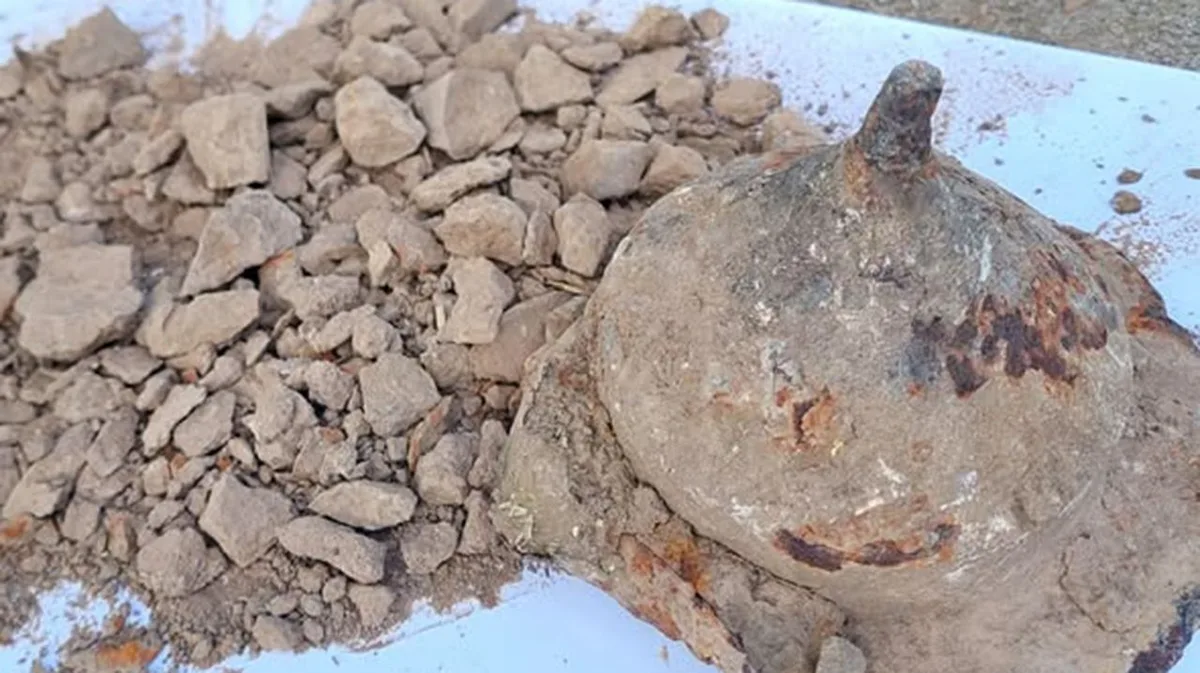
The iron shield boss was covered with caked earth when it was found. (Image credit: Bartłomiej Bartecki, Hrubieszów Museum) A man searching for spare auto parts at a junkyard in Poland discovered an entirely different kind of treasure: part of a 1,800-year-old shield that was filled with bones.
The shield's age and location suggest that it belonged to a Vandal warrior, according to the archaeologists who excavated the find.
The Vandals were Germanic people who lived in Poland at that time.
After the Germanic invasions of the Roman Empire, the Vandals, whose name became synonymous with destruction, moved south and eventually settled in North Africa in A.D.
429, long after this shield was buried.
The bones seem to have been part of a cremation, which was also a Vandal tradition.
However, the archaeologists lamented in an Aug.
20 Facebook post that the original grave has been lost to time.
The ancient shield boss — the central iron hub of the full shield — was found in a junkyard in southeastern Poland. (Image credit: Bartłomiej Bartecki, Hrubieszów Museum ) The newfound artifact consists of the shield's central iron "boss," or "umbo," which protected the hand while supporting the wood and leather of the full shield built around it.
The wood and leather have now rotted away.
The shields of Roman legionaries also had a central boss.
But the Romans never got that far north , and the pointed style of the boss indicates it is of second-century Vandal origin.
Archaeologists think the bones are from the cremation of a Vandal warrior. (Image credit: Bartłomiej Bartecki, Hrubieszów Museum ) Junkyard find Examinations showed the plug of dried earth inside the shield boss contained cremated bones. (Image credit: Bartłomiej Bartecki, Hrubieszów Museum ) According to the Facebook post, the shield boss was discovered earlier this month at a junkyard in the town of Hrubieszów, near Poland's southeastern border with Ukraine.
The man who found it immediately knew the artifact was very old, and he sent a photograph of it to the Father Stanisław Staszic Museum at Hrubieszów .
5News aggregated this summary from the outlet’s public feed. The full article, with all the context, is on www.livescience.com — the content belongs to Live Science.