New private 'Perceptor' probes will keep an eye on satellites high above Earth
Satellites high above Earth may soon have fewer places to hide.
San Francisco-based company Astranis announced today (Aug.
13) that it's developing a line of spacecraft called Perceptor, which will keep an eye on satellite activity in geostationary orbit (GEO).
GEO lies 22,236 miles (35,786 kilometers) above Earth, an altitude at which orbital speed matches our planet's rotational velocity.
It's therefore a popular destination for communications, weather and reconnaissance spacecraft — and, increasingly, an arena for off-Earth spying, as space powers seek to keep tabs on their competitors' activities .
Astranis currently operates five satellites in this distant orbital realm, which "support the U.S. military, bring connectivity to remote areas and provide critical capabilities like GPS ," according to the company's website .
It plans to leverage and extend this expertise with Perceptor, helping the U.S. government and other potential customers learn more about what's happening high above our heads.
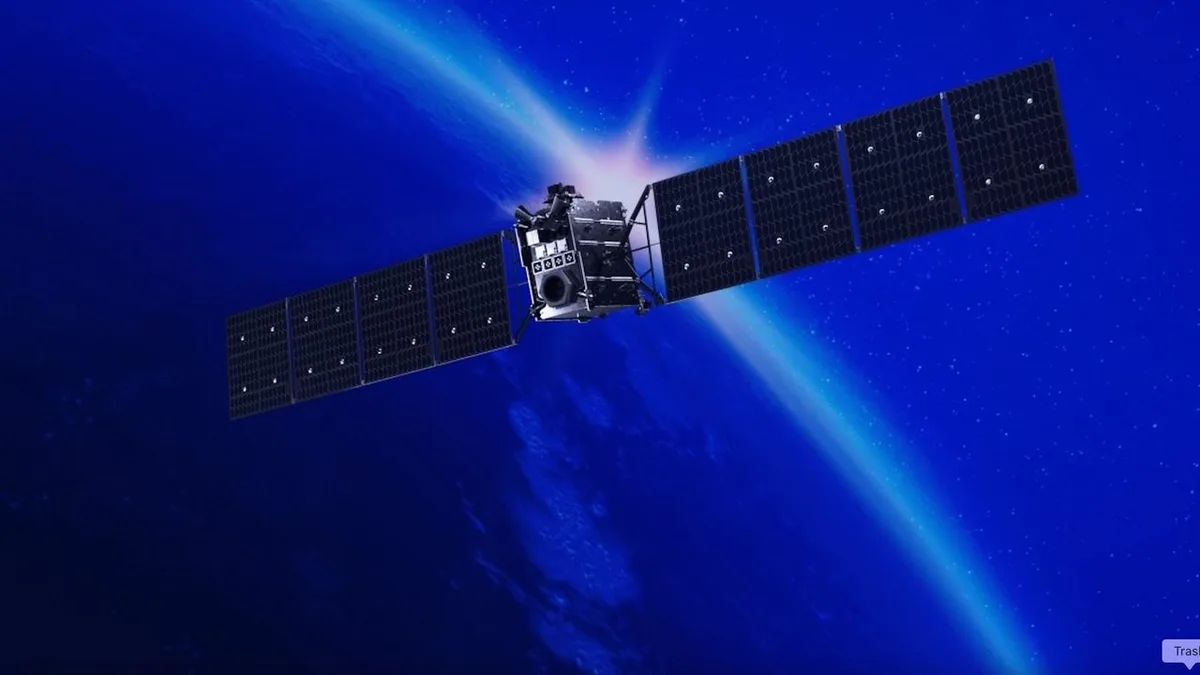
The new line will be based on Astranis' "MicroGEO" satellite platform, so named because it's smaller than typical GEO craft.
"Astranis provides mission-critical infrastructure for strategic higher orbits.
What we found is our means to detect and respond to emerging threats to this infrastructure are sorely lacking," John Gedmark, Astranis' CEO and co-founder, said in a statement today.
"There are blind spots that will be used against us if not eliminated," he added.
"With Perceptor, we're meeting the increasing demand for security in GEO with our proven on-orbit platform and ability to produce at scale." Four Astranis MicroGEO satellites, which launched atop a Falcon 9 rocket in December 2024. (Image credit: Astranis) Perceptor spacecraft will sport a variety of sensors, which will allow them to take the measure of other satellites and their broader GEO surroundings.
"Multi-angle flybys can assess spacecraft capabilities, help troubleshoot anomalies on friendly spacecraft, and provide additional eyes in a domain where awareness has historically been limited," Astranis' statement reads.
Each Perceptor will also be highly maneuverable, using electric propulsion "to traverse the full GEO arc, repositioning dozens of times over its mission lifetime," company representatives added.
5News aggregated this summary from the outlet’s public feed. The full article, with all the context, is on www.space.com — the content belongs to Space.com.