Ancient stars dazzle in a celestial chandelier | Space photo of the day for Aug. 21, 2026
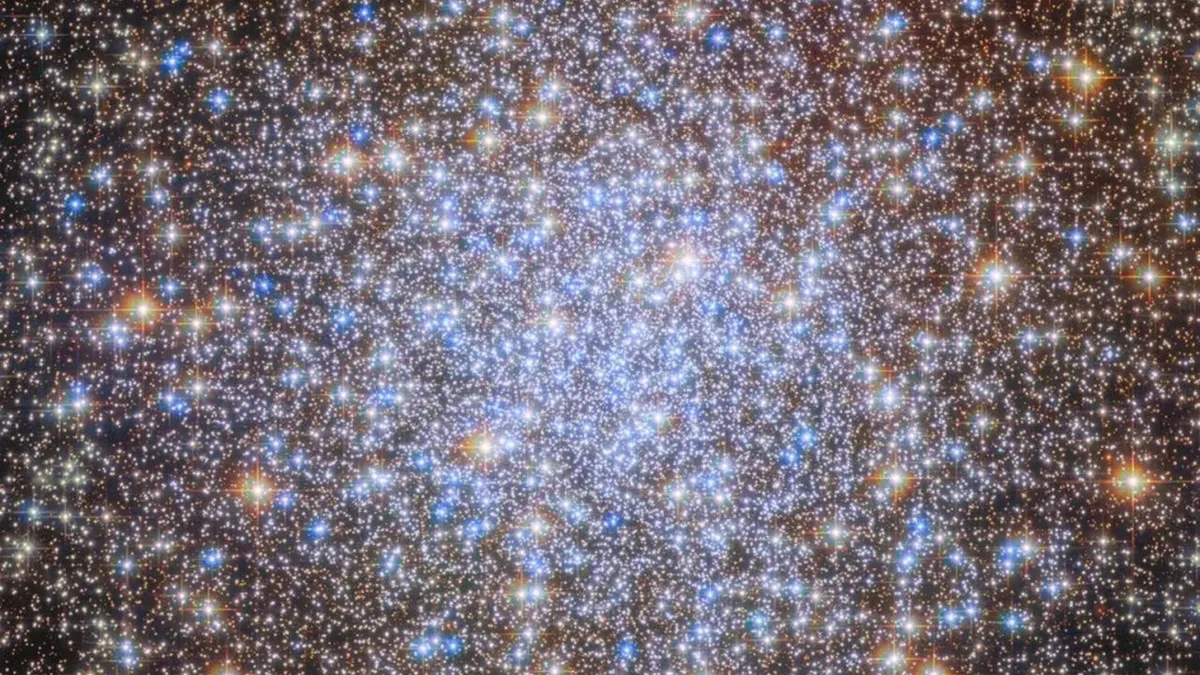
The Chandelier Cluster, or globular cluster NGC 6723, as imaged by the Hubble Space Telescope. (Image credit: ESA/Hubble & NASA, A.
Sarajedini, G.
Piotto) Stars scattered across the cosmos sparkle in the appropriately named Chandelier Cluster.
What is it? The Hubble Space Telescope captured this twinkling image of NGC 6723, or the Chandelier Cluster, a globular star cluster located 27,000 light-years away in our Milky Way galaxy.
Every bright spot in this mesmerizing cosmic chandelier is an individual star in the cluster.
Globular clusters typically contain older stars.
In fact, they're known to hold some of the oldest stars in the galaxy, with some being 10 billion years old or older.
Globular clusters are thought to contain some of the first stars, or the oldest stars in the universe .
As their name implies, globular star clusters are groups of stars.
But this particular type of star cluster isn't just full of ancient stars; it's also giant.
Globular star clusters can contain tens of thousands to millions of stars.
And just in our Milky Way galaxy, there are about 150 known globular clusters.
Why is it incredible? While this incredible image was captured by an ultra-powerful space telescope, backyard astronomers could spot the far-off globular cluster with binoculars or a telescope .
This type of star cluster is so visible because they are so massive and contain so many stars.
5News aggregated this summary from the outlet’s public feed. The full article, with all the context, is on www.space.com — the content belongs to Space.com.