Could 'dark photons' explain dark matter?
New research suggests that if dark matter is composed of "dark photons," it would not have heated the early cosmos like scientists previously thought.
If correct, this discovery could represent a paradigm shift in the hunt for the universe's most mysterious stuff.
Dark matter remains so elusive because, despite outweighing the everyday matter that composes stars, planets, moons and our bodies by a ratio of five to one, it is effectively invisible.
That is because it doesn't interact with light.
And the fact that electrons, protons, and neutrons do interact with light (or, more accurately, electromagnetic radiation ) has inspired the search for particles beyond the Standard Model of particle physics, leading to lots of hypothetical candidates for dark matter.
One of these candidates is the dark photon, the dark universe's version of a photon carrying a force other than electromagnetism, which is the responsibility of standard photons.
When dark photons have been considered in the past, scientists have concluded that they would have transformed into ordinary photons while still embedded in the thick and dense soup that filled the early cosmos.
This would have further heated this already blisteringly hot plasma and left detectable traces of dark photons.
This severely limits the search parameters in which dark photons could exist — so much so that many cosmological observations rule out the existence of dark photons.
Now, new computer simulations show that the dismissal of dark photons may have been a little hasty.
The conversion of dark photons to photons would have shut off before significant heating could occur.
That brings previously excluded search parameters back into play.
"These exclusions were saying the strength of dark matter had to be 10^8 times weaker than it actually can be," team member Anson Hook at the University of Maryland said in a statement.
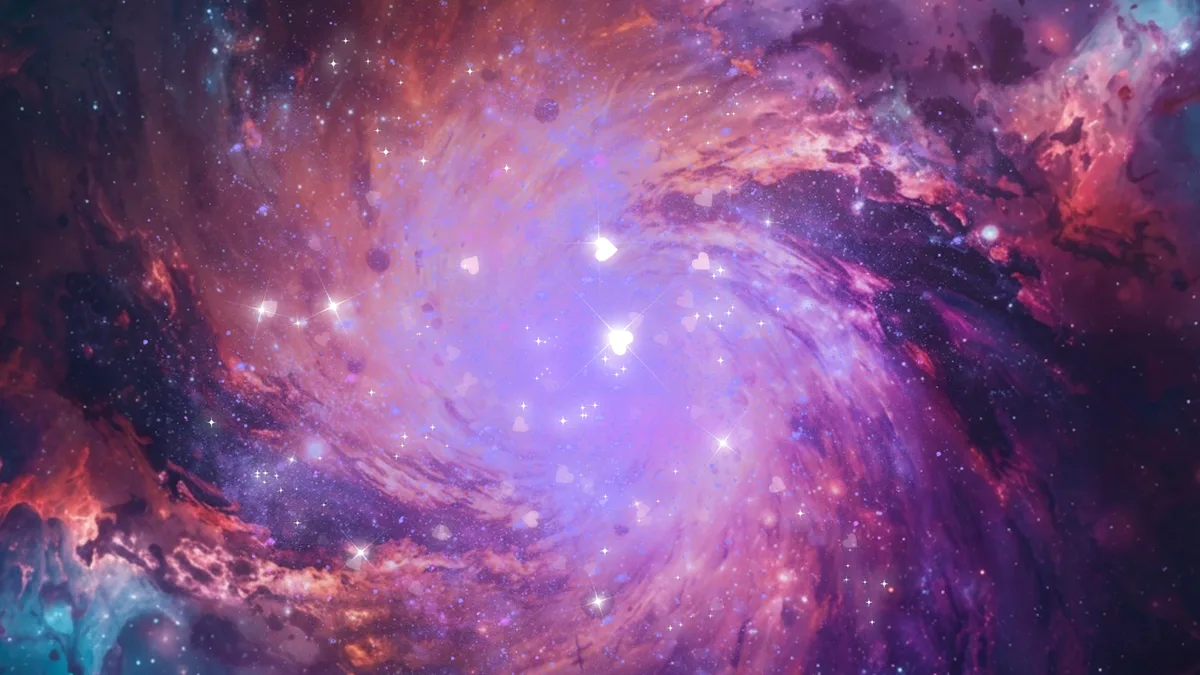
"This paper opens up a lot of new possibilities to look for dark matter." An illustration of a dark photon, a candidate for dark matter. (Image credit: Robert Lea (created with Canva)) The team behind this research first saw hints that the transformation of dark photons to photons may not be as straightforward as scientists had assumed when they realized the amount of energy involved is suspiciously large.
5News aggregated this summary from the outlet’s public feed. The full article, with all the context, is on www.space.com — the content belongs to Space.com.