Scientists made a paper battery you can swallow to power internal medical devices
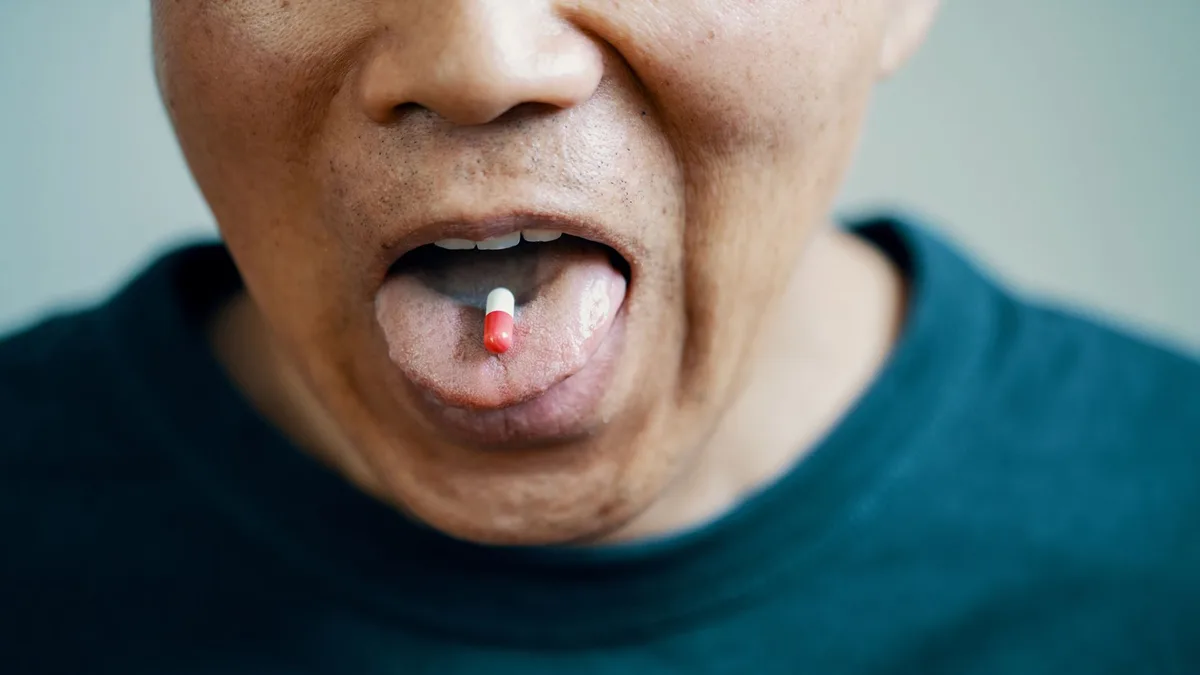
Scientists built a swallowable paper battery that can power medical devices inside the body and then gradually break down after its job is done.
So far, the battery has been tested only in pigs, in which it powered devices for up to three days.
If proven safe and effective in people, the battery could someday power temporary devices inside the gut while avoiding surgery to retrieve a conventional battery from the body when the device is no longer needed.
"I'm very excited about this work," said Reza Ghodssi , a professor of electrical and computer engineering at the University of Maryland who was not involved in the study.
"The battery is one component that takes up most of the space in an ingestible device, so anything that can provide the required power while reducing the size of the capsule is very promising." Examples of ingestible medical devices include those that detect bleeding, dispense medicines, or stimulate specific tissues or organs.
How does the battery work? Conventional batteries used in ingestible devices are not only large; they also need to stay sealed to prevent their internal materials from leaking into surrounding tissue and causing damage.
The new battery, described Monday (Sept.
21) in the journal Nature Chemical Engineering , is made from materials that gradually dissolve in the acidic gastrointestinal tract and can then be safely absorbed without leaving behind harmful fragments or toxic byproducts.
The battery is built in layers.
A magnesium alloy forms the anode (the battery's negative terminal), while the cathode (positive terminal) contains molybdenum trioxide and activated carbon.
Between the two sides is a biodegradable electrolyte that allows the battery to generate electric current.
These materials have been used in earlier biodegradable battery prototypes for temporary medical and wearable electronics.
The new design adapts them into a thin, porous, paper-like battery using cellulose nanofibrils as a binder, whereas earlier versions used larger binders.
"The paper structure improves the battery's strength and control over degradation while still allowing it to produce electricity," study co-author Giovanni Traverso , director of the Laboratory for Translational Engineering at MIT, told Live Science in an email.
5News aggregated this summary from the outlet’s public feed. The full article, with all the context, is on www.livescience.com — the content belongs to Live Science.