AI trained to 'think' like human pathologists may be better at spotting cancer
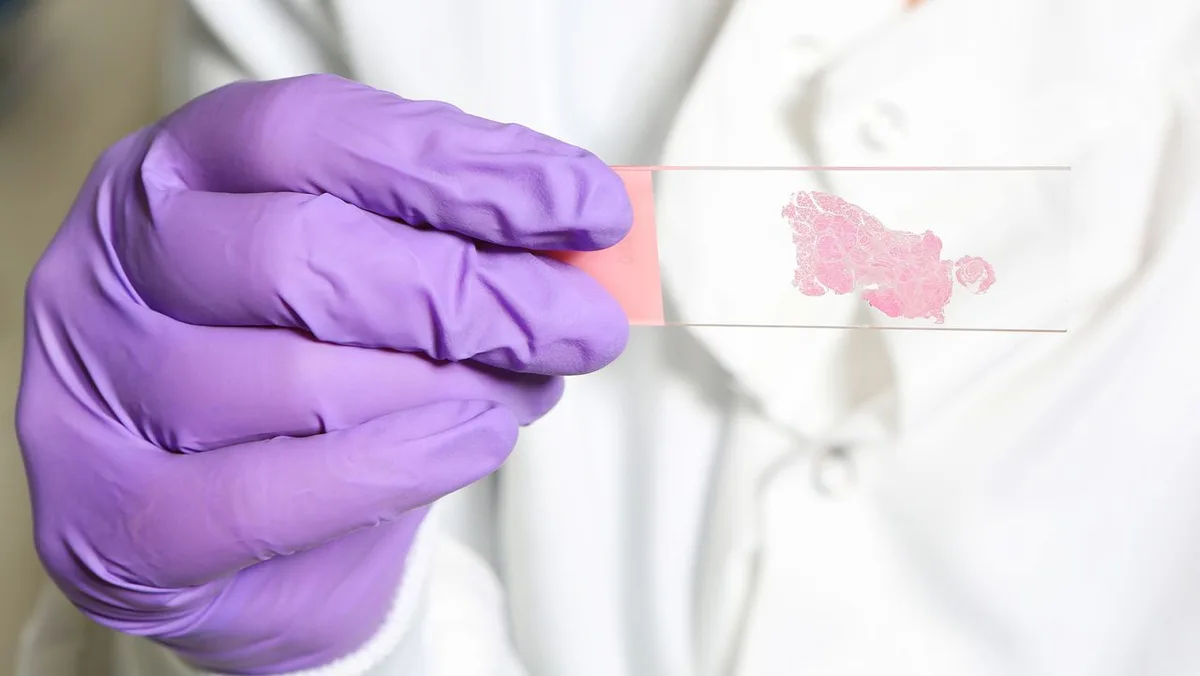
Artificial intelligence (AI) algorithms that hunt for cancer may do a better job when they approach the analysis as if they were a human pathologist, a new study suggests.
Many AI systems analyze preselected regions of a tissue sample, or they split a whole pathology slide into patches of a fixed size.
By contrast, a pathologist searches more dynamically, panning across the tissue, zooming in and out, and pausing over areas that raise red flags.
A whole slide can contain billions of pixels, while the evidence of cancer may occupy only a tiny patch.
Study co-author Zhi Huang , an assistant professor of pathology and laboratory medicine at the University of Pennsylvania, compared the process to a search-and-rescue helicopter.
"You don't start by inspecting one square meter of ground," Huang told Live Science.
You scan the landscape first and then swoop in for a closer look.
In the new study, published in July in the journal Nature , Huang and colleagues demonstrated that cancer-detecting AI might work better when it takes this humanized approach.
Training AI to hunt for cancer AI algorithms called vision language models (VLMs) struggle with the first step that Huang described — that initial, cursory scan.
That's in part because many pathology AI systems learn from what pathologists leave behind at the end of that search: a labeled image pointing out where the cancer is or an official diagnosis.
Instead, the researchers trained their new AI on pathologists' search behavior.
They called this approach to training "Pathology-CoT," short for "chain of thought." It turns observable actions, including where pathologists move around and zoom in on an image, into training data.
To collect the data, the team created a tool that recorded how pathologists moved around a slide and changed magnification.
The raw logs, gathered from eight pathologists, were messy, as a given pathologist might drift across a slide, overshoot their intended region of focus or fiddle with magnification to adjust it to their liking.
5News aggregated this summary from the outlet’s public feed. The full article, with all the context, is on www.livescience.com — the content belongs to Live Science.