Curiosity's top 10 photos of Mars after 5,000 days of exploration
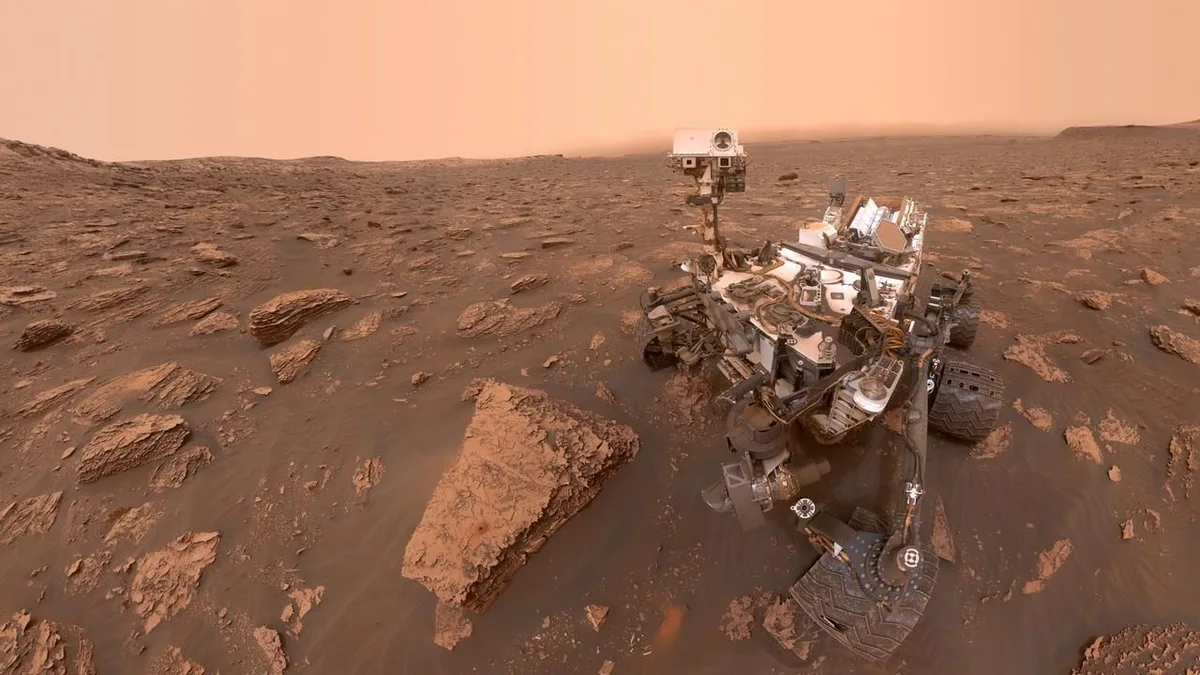
As of Aug.
30, 2026, NASA's Curiosity rover has officially seen the sun rise and set over Mars' reddish horizon more than 5,000 times in its quest to discover if life ever existed there.
The rover was originally planned to operate for only two years, but the mission is still going strong more than 14 years after landing on Mars in August 2012.
During that time, the rover has weathered global dust storms and climbed more than 3,200 feet (1,000 meters) up a mountain — although its tires have gotten some rather large holes in them in the process.
The rover still uses its 17 cameras to take hundreds of photos every single sol (Martian day), beaming a total of more than 780,000 photos back to Earth for scientists to analyze while mission controllers decide where the rover should roam next.
In honor of the intrepid rover's 5,000th day on the Red Planet, here are 10 of the most iconic photos Curiosity has snapped for Earthlings to admire.
Sol 548: Mount Sharp on the horizon (Image credit: NASA/JPL-Caltech) Curiosity snapped this photo of Mount Sharp on Feb.
19, 2014, about a year and a half after it landed on Mars.
At the time, scientists were hopeful the rover could make it to the base of the 3.4-mile-high (5.5 kilometers high) mountain to explore interesting terrain previously seen from space.
As the years passed, Curiosity more than surpassed that goal; the rover has climbed more than half a mile up into the mountain's foothills, traveling a total of more than 23.6 miles (38 km) from its landing spot, all while conducting important science along the way.
Sol 956: Blue skies on Mars (Image credit: NASA/JPL-Caltech/MSSS/Texas A&M Univ) Curiosity took a photo of the Martian sunset in color for the first time on April 15, 2015, revealing a brilliant blue sky just before the sun dipped behind the shrouded mountains in the distance.
The Martian sky is usually yellow to orange , according to NASA.
Fine dust particles in the atmosphere scatter red and yellow light across the entire sky.
However, the dust is just the right size for some blue light to slip past, so most of the light in the sky near the sun is blue.
5News aggregated this summary from the outlet’s public feed. The full article, with all the context, is on www.livescience.com — the content belongs to Live Science.