Brain shrinkage tied to aging 'pauses' as a woman nears menopause, study finds
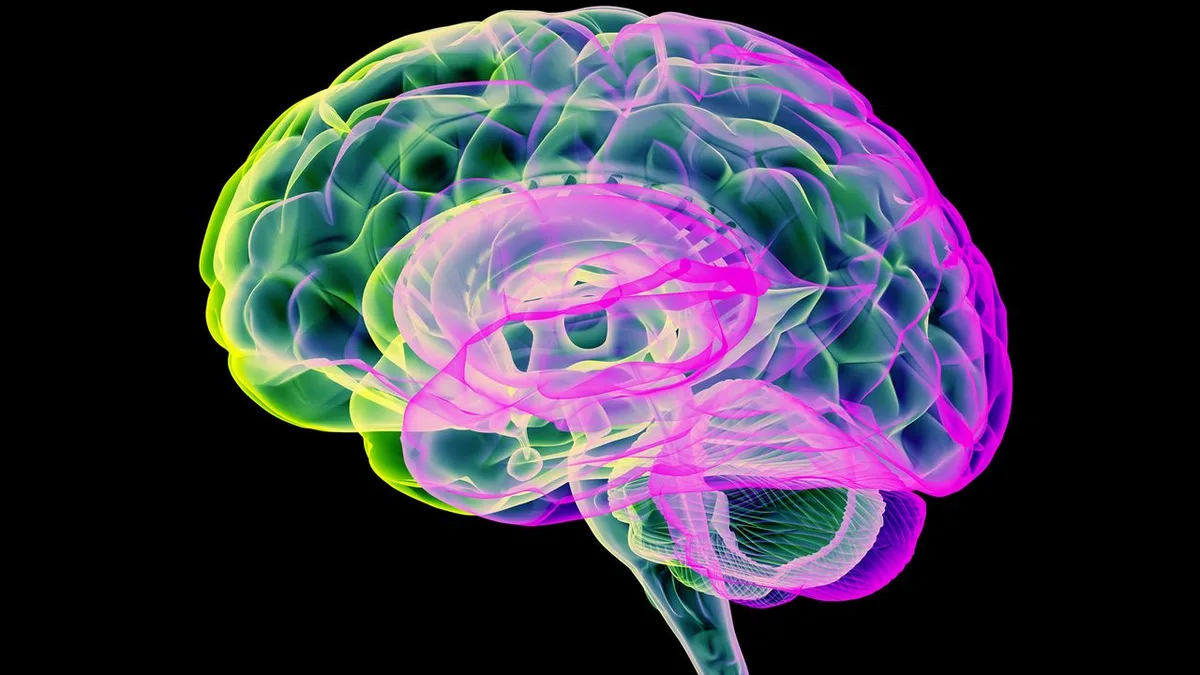
The brain undergoes dramatic changes during puberty and pregnancy, but during menopause, the organ's structure remains remarkably stable, a new study suggests.
The research, published Sept.
8 in the journal Nature Communications , examined the brain's gray matter, which mostly includes the wrinkled outer surface of the organ, called the cerebral cortex.
Past studies have found that the volume of gray matter shrinks markedly during puberty and pregnancy , likely reflecting a fine-tuning of neural circuits during those periods.
There's also a gradual decline in gray matter during adulthood that's seen as a normal part of aging, said study co-author Sophie van't Hof , a doctoral student in psychiatry at Amsterdam University Medical Center.
However, during the transition leading up to menopause, that gradual loss of gray matter levels off temporarily, the study found.
"This study provides the first direct longitudinal comparison of brain structural changes across all three major female hormonal transitions," said Magdalena Martínez-García , scientific director of maternal health for the Ann S.
Bowers Women's Brain Health Initiative, a brain imaging consortium headquartered at the University of California, Santa Barbara.
"I really appreciate the effort that went into finding and curating such an impressive longitudinal dataset of the female brain," Martínez-García, who was not involved in the study, told Live Science in an email.
Declines in puberty and pregnancy For their analysis, the researchers gathered data from the UK Biobank , a biomedical database that contains information from 500,000 U.K.-based adults.
That data includes MRI scans of people's brains, which the team used to study brain changes in menopause.
To look at puberty and pregnancy, the researchers pulled from several brain-scan datasets that had been compiled by Leiden University in the Netherlands.
In all, the study included data from 1,095 brains across the three life stages.
They analyzed each participant's brain at two different time points, examining how each person's brain changed over time and how it compared to others' brains.
5News aggregated this summary from the outlet’s public feed. The full article, with all the context, is on www.livescience.com — the content belongs to Live Science.