'At some point we're going to have to react': How El Niño, climate change, and crime are pushing the Amazon rainforest over the brink
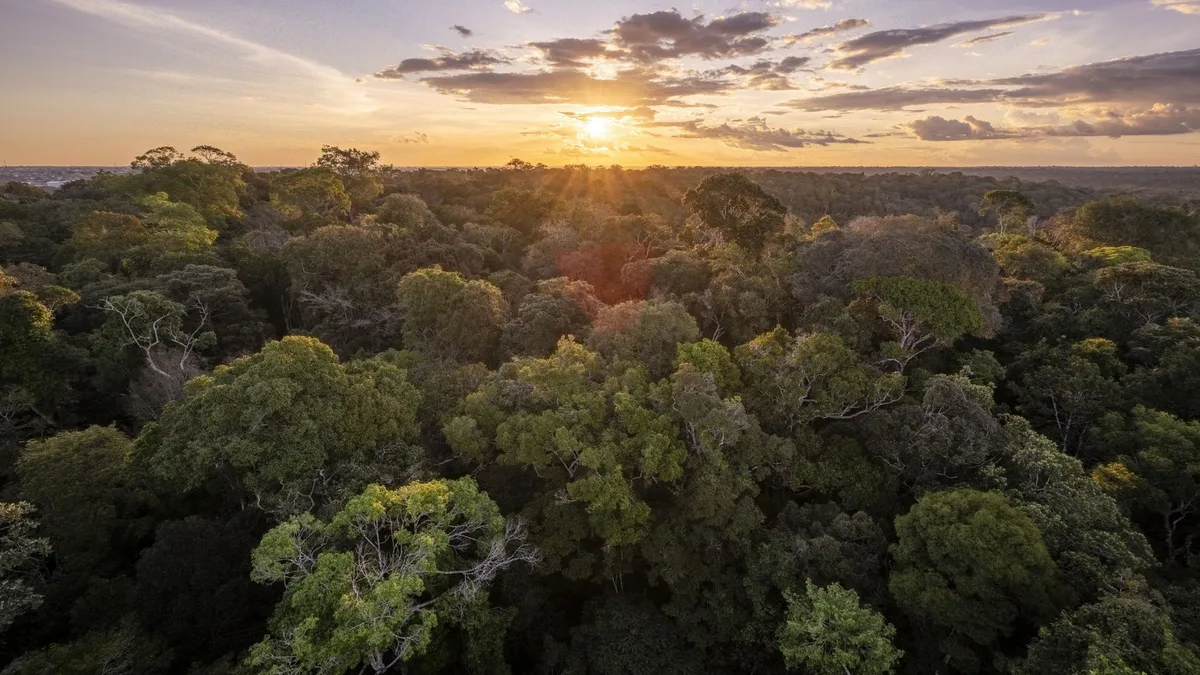
The Amazon, Earth's largest tropical rainforest, could be on the brink of an irreversible change as the ongoing El Niño strengthens its grip on our climate.
El Niño is the warm phase of a multiyear natural climate cycle that is often marked by rising global temperatures and disruptive weather.
This time, scientists monitoring the event are warning that climate change has helped supercharge it to likely the strongest ever recorded .
As temperature records are breached and the risk of a humanitarian crisis looms, already stressed natural systems are coming under unprecedented strain .
The Amazon is one such system.
Having suffered severe degradation in recent decades, some fear that a historic El Niño could launch a devastating drought that may help force the Amazon beyond a tipping point — transforming the verdant rainforest and vital store of the planet's carbon into savannah.
To get to grips with this looming catastrophe, Live Science spoke to Bernardo Flores , a Brazilian ecologist who studies the Amazon and has been sounding the alarm about its fate.
Patrick Pester: How could a strengthening El Niño impact the Amazon? Bernardo Flores: We have a very high confidence that it is already a strong El Niño and that it will be very strong, possibly the strongest one on record.
This is very concerning because during past decades we saw a few very strong El Niños — not as strong as this one, probably — and the consequences were very dramatic, and they became increasingly dramatic.
The Amazon becomes drier during El Niño, and then you have conditions for forest fires.
You can have different types of fires, but forest fires are those that penetrate and spread through the moist forest, which is rarely flammable.
And during these years, you can have thousands of kilometers of burnt forest that were not disturbed before.
We expect that these burnt areas will increase, possibly exponentially.
There will be an acceleration, and that's a sign of a tipping point .
5News aggregated this summary from the outlet’s public feed. The full article, with all the context, is on www.livescience.com — the content belongs to Live Science.