Celestron StarSense Explorer DX 130AZ review
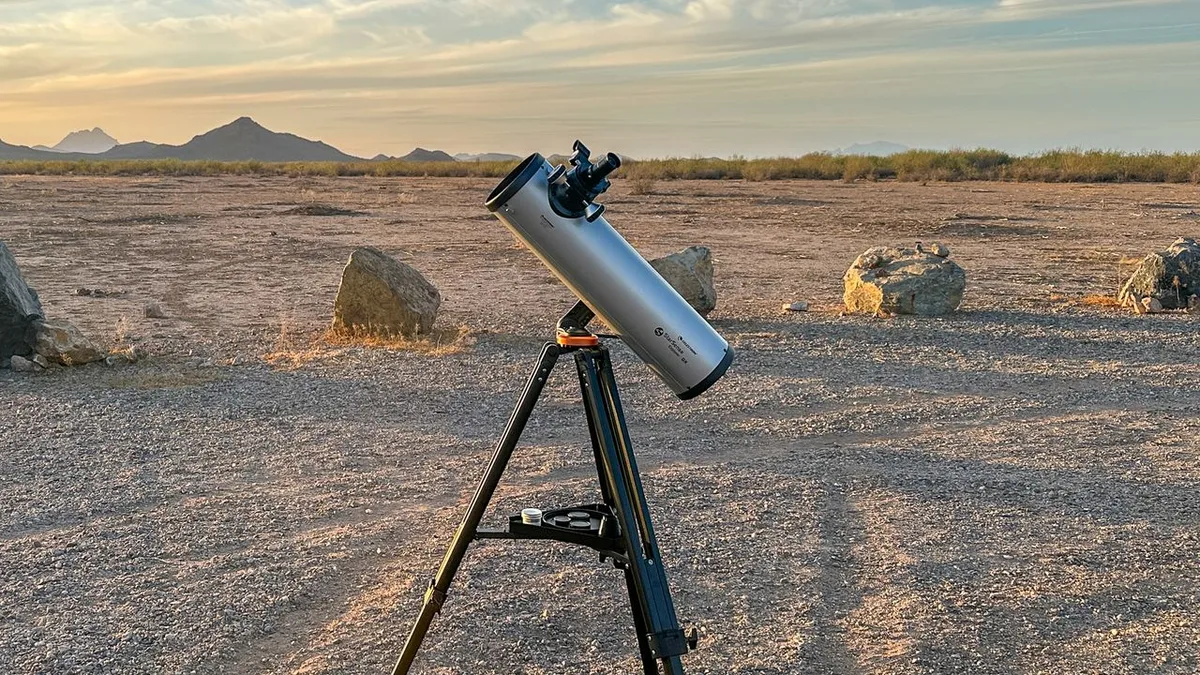
The Celestron StarSense Explorer DX 130AZ is a 5.1-inch (130mm) f/5 Newtonian reflector, one of many 130mm f/5 reflectors offered by Celestron.
The DX 130AZ is also one of two 130mm StarSense Explorer variants, the other being a tabletop Dobsonian.
The optical tube here rides on an alt-azimuth tripod instead and uses a 2-inch focuser, but otherwise, there are no major differences.
The DX 130 AZ is certainly one of the better telescopes in the StarSense Explorer series; there are also several decent Dobsonians, a pair of decent Schmidt-Cassegrains, the merely acceptable DX 102 refractor, a 114mm Bird-Jones model and some small refractors that aren’t of much use.
The DX 130AZ is definitely on the small end of what can be called a "serious" instrument, but even under a fairly light-polluted sky, it’s big enough to show you plenty of deep-sky objects and, of course, stunning detail on the moon and planets.
Celestron StarSense Explorer DX 130AZ review Celestron StarSense Explorer DX 130AZ: Design (Image credit: Zane Landers) 130mm f/5 Newtonian reflector with a parabolic primary and flat secondary mirror Manual alt-azimuth mount and tripod with StarSense smartphone dock — no motors Two 1.25” eyepieces included (25mm yielding 26x, 10mm yielding 65x) The DX 130 rides on the same alt-azimuth mount/tripod shared with the other StarSense Explorer DX models.
It’s reasonably sturdy, with one major caveat: you can’t actually point the DX 130 straight up.
When aimed above about 70 to 75 degrees, the tube crashes into the mount or the tripod legs.
However, there is a simple workaround here.
Deliberately set the tripod up unlevel, which lets you reach the zenith without affecting the mount or the StarSense system at all.
It looks a little silly, but it works.
The tripod is fairly stable as long as you’re not in a windy spot.
Loading the accessory tray with sandbags or diving weights, or filling the hollow aluminum legs with sand or foam, helps considerably if you’re willing to do a bit of DIY work.
The mount has slow-motion controls with small gears for fine adjustments.
5News aggregated this summary from the outlet’s public feed. The full article, with all the context, is on www.livescience.com — the content belongs to Live Science.