Climate change will harm our health. Here's what could protect us.
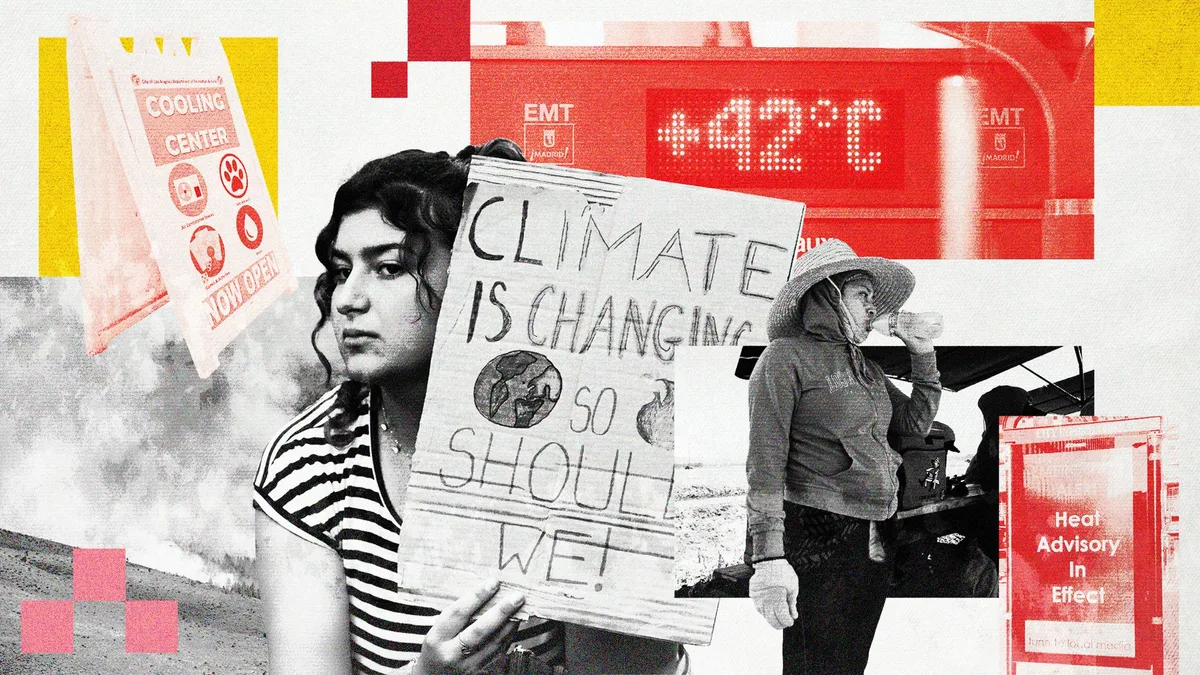
Burning up As the planet warms, our environment will be transformed, but so will our bodies.
In this series, ' Burning up ,' we investigate the health impacts of climate change, focusing on heat , air quality , food and infection risk .
In this installment, we evaluate the promising solutions that could help us adapt to our warmer future In the summer of 2008, New York City lowered the threshold for activating its emergency heat plan.
The city had historically relied on the National Weather Service threshold of a heat index of 105 F (40.6 C), but they noticed that people were getting heat stroke at lower temperatures.
As part of a wider effort, they changed the alert threshold: it would trigger if the temperature reached 100 F (37.8 C) for a day, or 95 F (35 C) for two days in a row.
When the threshold was reached, city officials conducted targeted outreach, including to vulnerable groups, like homeless people; alerted residents on their phones; launched measures to protect the power and water supply; and opened cooling centers.
Lowering this threshold correlated with a more than 50% reduction in hospitalizations for heat stroke and related illnesses on hot days.
New York's case study offers one of the clearest examples of an intervention that worked to protect people from deadly heat.
The strongest evidence is where these approaches reduce illness, hospital visits or death, not just heat exposure, pollution levels or other intermediate markers.
Charles Leonard, associate professor of epidemiology at the University of Pennsylvania As the planet warms, we will need to find more of these solutions.
The consensus among scientists is that the most effective way to avoid the worst health outcomes of climate change is to slow warming by reducing carbon emissions.
Limiting warming to 1.5 degrees Celsius (2.2 degrees Fahrenheit), for instance, would mean 11,600 fewer deaths due to wildfire smoke exposure in the U.S. annually, compared with warming of 5.4 F (3 C).
But even if we rapidly reduce emissions, climate change will have wide-ranging effects on our health So what measures actually work to protect people's health? Live Science reviewed dozens of studies and talked with 19 climate and health experts at universities and health and climate associations, to identify the most promising solutions to two of the biggest climate-related threats: extreme heat and wildfire smoke.
Some interventions have demonstrated a reduction in deaths or disease at the population level, while others have used modeling to predict health impacts or rely on proxy measures.
5News aggregated this summary from the outlet’s public feed. The full article, with all the context, is on www.livescience.com — the content belongs to Live Science.