'This is not the outcome we were working towards': $30 million mission to save NASA's Swift telescope fails
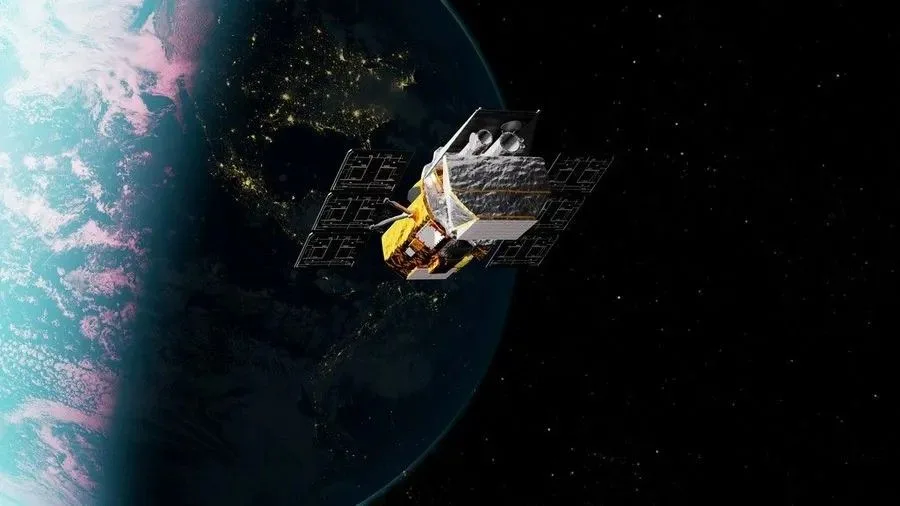
NASA's Swift Observatory is set to come crashing down to Earth later this year after a private mission failed to save the tumbling telescope.
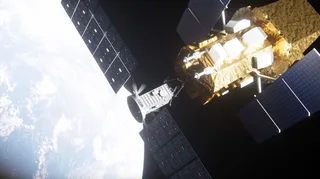
A rescue spacecraft named LINK, which was designed by private company Katalyst Space, launched on July 3 with the aim of raising the falling observatory to a higher orbit.
However, in the weeks following launch, the rescue mission itself encountered problems and started spinning out of control .
On Wednesday (Aug.
19) NASA announced that the rescue mission would not continue as planned.
The mission's failure means the observatory is doomed to continue falling back to Earth.
"This is not the outcome we were working toward, but it does not change why this mission was worth attempting," NASA administrator Jared Isaacman said in a statement .
The Neil Gehrels Swift Observatory was launched in 2004 to detect gamma-ray bursts, the most powerful explosions in the universe.
Over time, the spacecraft has been hit by scattered molecules in the outer reaches of our planet's atmosphere, creating friction that slowed down its orbit and reduced its altitude.
On top of that, an uptick in solar activity in recent years has caused our outer atmosphere to expand, increasing the number of molecules the telescope encountered, pulling it closer to Earth.
The $30 million Swift Boost mission was contracted to the Arizona-based aerospace startup Katalyst in 2025.
The plan was for this private craft to rendezvous with the aging observatory and boost it to a higher orbit.
This gave Katalyst engineers less than a year to design and carry out the mission before Swift's clock ran out.
"We knew this was a high-risk, high-reward mission – a first-of-its kind attempt, developed on an unprecedented timeline driven by the Sun's activity," Shawn Domagal-Goldman , director of NASA's Astrophysics Division, said in the statement.
5News aggregated this summary from the outlet’s public feed. The full article, with all the context, is on www.livescience.com — the content belongs to Live Science.