A seat but not always a say: UKZN study explores women in traditional leadership
Women may have a seat at the table in traditional councils in KwaZulu-Natal but that does not always mean they have a say in the decisions that affect their communities, a new study has found.
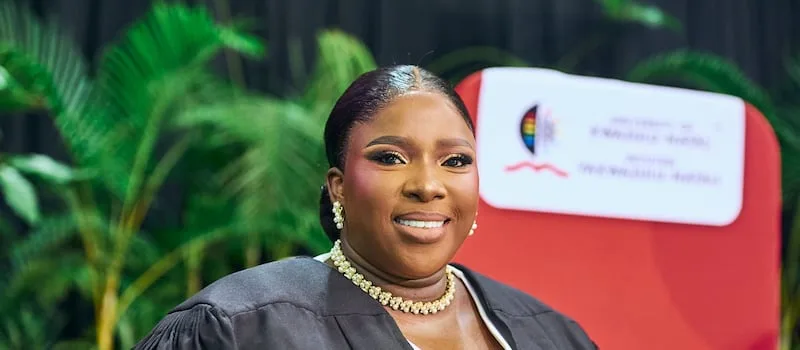
Nomakhwezi Ntshele, a co-ordinator for the health portfolio committee in the KwaZulu-Natal legislature, examined women’s participation in traditional leadership as part of her MCom in leadership studies at the University of KwaZulu-Natal (UKZN).
Her research looked beyond the number of women represented in traditional councils and asked whether they were able to influence discussions, agendas and decisions.
“My interest in the study came from a simple but important question: if our laws recognise gender equality, why do women still experience barriers to meaningful participation in traditional leadership?” said Ntshele.
She said traditional leadership remained an important part of community governance in KwaZulu-Natal, with responsibilities including:
“I wanted to understand the gap between formal recognition of women’s rights and their lived experiences within these structures,” she said.
Women can make important contributions to their communities without necessarily being recognised as equal holders of authority
Ntshele found a woman could be formally recognised as a member of a traditional council but have limited influence over what was discussed and how decisions were made.
“In practice, it means a woman can be physically present in a traditional council, formally recognised as a member and still have limited influence over what is discussed, how decisions are made and what ultimately gets decided.”
Her research found women’s participation was often more visible in welfare and community support matters, while issues such as land, succession, resource allocation and strategic governance remained more strongly male-dominated.
“Women can therefore make important contributions to their communities without necessarily being recognised as equal holders of authority.”
She said this was why it was important to distinguish between simply counting women in leadership structures and looking at whether they had real influence.
“Meaningful representation is achieved when women’s voices can influence agendas, deliberations and final outcomes, rather than simply increasing the number of women in the room.”
One of the most important findings for Ntshele was that formal inclusion and actual authority could exist separately.
5News aggregated this summary from the outlet’s public feed. The full article, with all the context, is on www.timeslive.co.za — the content belongs to TimesLIVE News.