We found the hidden force that created two chains of underwater volcanoes running side by side
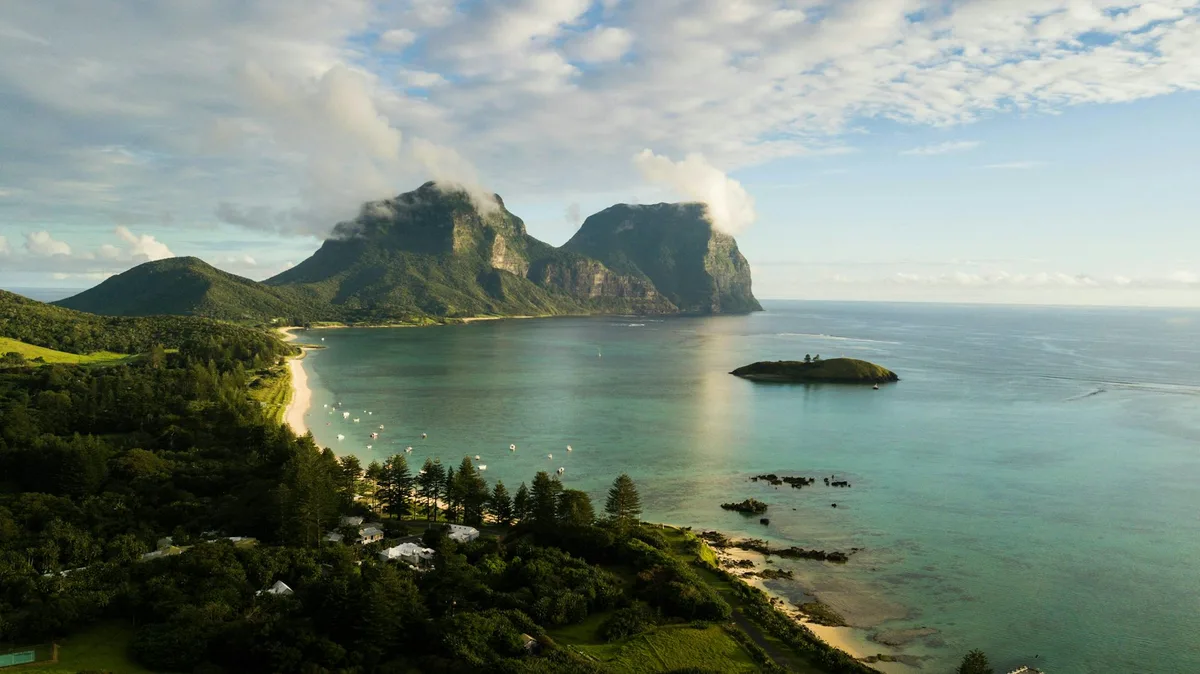
Sunset over Mt Lidgbird and Mt Gower at Lord Howe Island.
Dylan Shaw/Unspash Lord Howe Island sits about 600 kilometres off the New South Wales coast, a crescent of rainforest and sea cliffs that draws visitors for its spectacular beaches and its unique birdlife.
Few realise they are standing on the weathered remains of a volcano.
And that volcano has family.
Lord Howe is part of a chain of islands, called “seamounts”.
It is the only island above sea level – the rest are submerged in the Tasman Sea.
Roughly 650 kilometres west runs a second chain, the Tasmantid seamounts, tracing almost the same path.
Two nearly identical chains side by side in the middle of a tectonic plate is unusual.
For the first time, in a new paper published in the journal Gondwana Research, we can answer how this happened.
A blowtorch under a moving tectonic plate Most volcanoes occur where tectonic plates meet.
There are a few exceptions, Hawaii being the most famous: a plume of hot rock rises from deep inside the Earth and melts its way through the middle of the Pacific plate.
As the tectonic plate drifts overhead, the plume burns a new hole in it, then another, like a blowtorch under a moving sheet of metal, until a chain of seamounts is formed.
That is exactly what the Tasmantid and Lord Howe chains look like.
Both chains get steadily younger towards the south, tracking the northward drift of the Australian plate over the past 40 million years.
5News aggregated this summary from the outlet’s public feed. The full article, with all the context, is on theconversation.com — the content belongs to The Conversation Australia.