The Spare Room by Helen Garner is now an opera. Does it work?
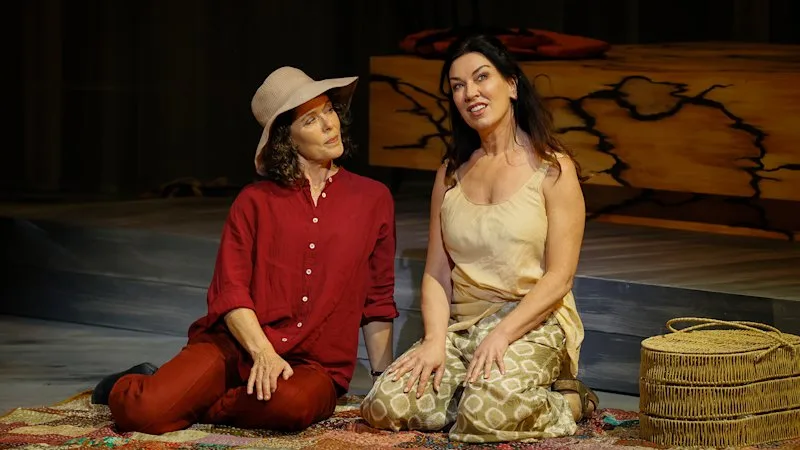
If you’re familiar with Helen Garner’s 2008 book, The Spare Room , you might think: how on earth could this be made into an opera?
A semi-autobiographical meditation on what it is to care for someone who is dying, to put your own beliefs aside and support them indiscriminately, the book is visceral about the awfulness of cancer. The pain, the sweat, the pissing the bed. Levity is long gone.
Composer Jane Hammond and her longtime collaborator, librettist Therèsa Borg, however, saw The Spare Room as ripe for the operatic picking.
With Garner’s blessing, a gestational process of almost five years ensued, finally resulting in Victorian Opera’s latest world premiere.
It is a remarkable achievement, and it would be remiss not to mention: the author, composer, librettist, director, conductor, the two star performers and CEO of the company are all women.
In contemporary chamber style, Hammond has scored for 13 players, who here manage tiny moments of introspection and huge emotional outbursts. Bach is mentioned often in Garner’s text, and Hammond deftly weaves in some of the Three-Part Inventions , creating a gloriously layered amalgamation of styles and colours.
Some of the magic is lost, however, in the amplification of voices and certain instruments, particularly percussion, which threw out the balance at times. Mic-ing opera singers means that, for the most part, there is no vocal light and shade, and we are left longing for some pianissimo.
As Helen, Natalie Jones is grounded and direct, with steely vocals that, suitably, border on shrill when the situation calls for it. Opposite Jones is Antoinette Halloran, perfectly cast as the woo-woo Nicola. Halloran still has such electric presence and the most magnificent stage face, and Nicola’s more expansive music suits Halloran’s lyric voice.
The work itself gets better as the night progresses, and when the drama matches the book in its level of intensity. The confrontation between Helen and Nicola is extraordinary.
Your enjoyment of this opera might depend on how wedded you are to Garner. There are moments of comedy, perhaps required for a two-hour stage adaptation, but do not align with the original text.
There is a sense of belonging in seeing one’s own experience on stage. Cancer has touched almost everyone, and amid a very Melbourne staging, where there are comments about the weather, people riding bikes, this very masthead used as a prop – it’s validating to see women’s anxieties and naturalistic experiences presented in this heightened art form. Reviewed by Bridget Davies
Za górami is a Polish expression meaning “behind the mountains”, often used to begin fairytales (akin to “Once upon a time”). It’s also the name of a much-loved Polish folk song – one that served as the title track and thematic anchor for the 2024 debut album by Alice Zawadzki, Fred Thomas and Misha Mullov-Abbado.
The UK trio have now adopted Za Górami as their collective moniker, and it couldn’t be more apt.
5News aggregated this summary from the outlet’s public feed. The full article, with all the context, is on www.brisbanetimes.com.au — the content belongs to Brisbane Times.