Cosmic 'jellyfish' wows skywatchers after SpaceX launch | Space photo of the day for Oct. 14, 2026
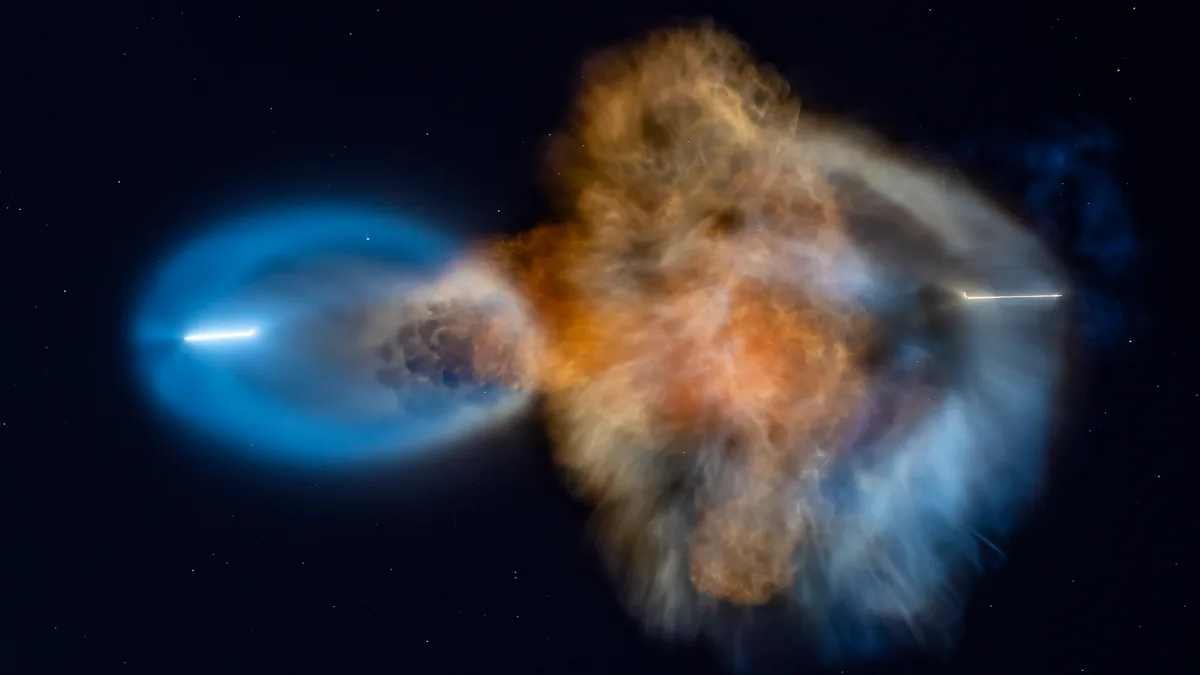
A "jellyfish" in the early-morning sky created by SpaceX's launch of the CRS-35 cargo mission on Oct.
13, 2026. (Image credit: SpaceX) Did you see a gigantic, glowing jellyfish in the night sky early on Tuesday morning (Oct.
13)? If so, it's not an alien invasion (sorry); it was SpaceX launching its latest mission to the International Space Station (ISS).
What is it? Just before dawn on Tuesday (Oct.
13), a SpaceX Falcon 9 rocket lifted off from Cape Canaveral Space Force Station in Florida, carrying to space a robotic Dragon capsule filled with thousands of pounds of cargo.
The liftoff kicked off CRS-35, the 35th mission that SpaceX is flying to the ISS as part of the company's Commercial Resupply Services agreement with NASA.
Under the CRS contract, SpaceX has been sending cargo including medical supplies, food, clothing, scientific experiments and more to the space station.
It will take Dragon a couple of days to reach the orbiting lab.
If all goes to plan, the capsule will autonomously dock with the ISS' Harmony module around 11 a.m.
EDT (1500 GMT) on Thursday (Oct.
15).
Why is it incredible? Falcon 9 launches the CRS-35 mission to the @Space_Station https://t.co/QiHIqlDLTH October 13, 2026 Imagine you wake up early in the morning.
Perhaps you're rushing to get ready for work, or maybe you're just having a quiet moment with your coffee in the pre-dawn twilight.
Then imagine you look out the window and see what looks like a gigantic, glowing jellyfish made up of orange and blue light and gas stretching across much of the slowly brightening sky.
5News aggregated this summary from the outlet’s public feed. The full article, with all the context, is on www.space.com — the content belongs to Space.com.