One of America's biggest meteor craters is 100 million years younger than we thought — and coincided with a global extinction event
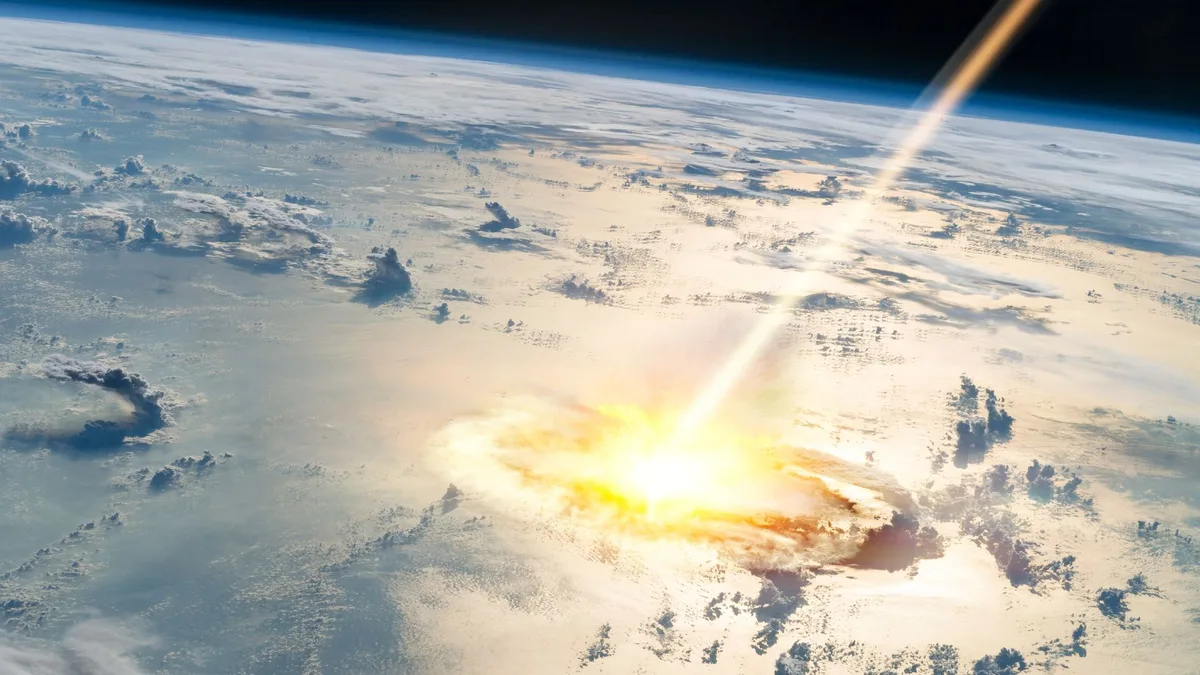
One of America's largest meteor craters is around 100 million years younger than scientists thought, which means the ancient impact coincided with — and potentially contributed to — one of the biggest global extinction events in Earth's history, according to a new study.
The underground impact structure, known as Ames crater, is located in northern Oklahoma and is named after a small town that sits above the submerged crater.
At around 10 miles (16 kilometers) wide, it is the fourth-largest impact structure in the U.S.
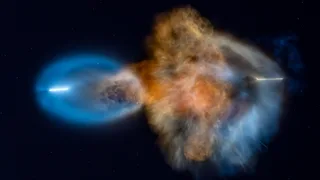
Ames crater was created when an Eiffel Tower-size space rock slammed into our planet at more than 70,000 mph (110,000 km/h).
At the time, the region was covered in a shallow ocean, and the crater was subsequently buried beneath layers of seafloor sediment.
Therefore, there are no visible signs of the crater at the surface today.
It was only discovered in 1991, when oil prospectors accidentally drilled into it.
Until now, researchers thought Ames crater dated to the Ordovician meteor event around 467 million years ago.
During this period, an unusually high number of large space rocks smashed into Earth, likely due to the fragmentation of a single parent body somewhere in space.
Scientists found fossils of marine animals in and around the crater that date to around the time of that event.
But in the new study, published July 7 in the journal Meteoritics and Planetary Science , researchers analyzed fracture patterns within tiny rocky fragments known as zircon crystals that were embedded in the underground crater.
This revealed that the impact actually occurred 370 million years ago, around 97 million years after the Ordovician meteor event.
There are no visible signs of the Ames crater today.
However, scientists have been able to map out its size and shape using ground-penetrating radar.
5News aggregated this summary from the outlet’s public feed. The full article, with all the context, is on www.livescience.com — the content belongs to Live Science.