How to see and photograph the partial lunar eclipse on August 27-28
Just over two weeks after the total solar eclipse on Aug.
12 comes an encore.
On the night of Aug.
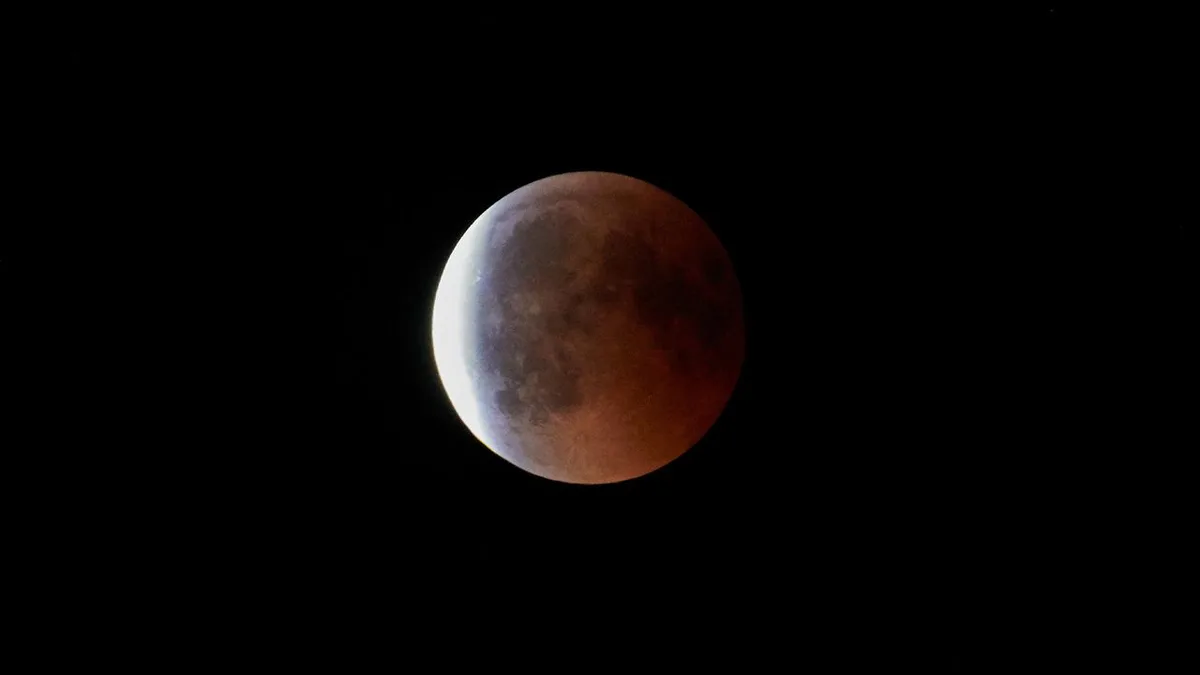
27–28 , a very deep partial lunar eclipse will see Earth's shadow cover more than 96% of the full moon.
Although it falls just short of becoming a total lunar eclipse — and therefore isn't technically a "blood moon" — much of the lunar surface will turn a coppery red to cameras.
It will also be the deepest lunar eclipse anywhere in the world until the next total lunar eclipse on Dec.
31, 2028.
Unlike a solar eclipse, a lunar eclipse is completely safe to observe with the naked eye and unfolds slowly over several hours, giving observers and photographers plenty of time to enjoy it .
Whether you're using binoculars , a telescope , a mirrorless camera or a smart telescope , it will be one of the best lunar photography opportunities for years.
Solar and lunar eclipses often come in pairs because they occur during the same eclipse season — a period of about 34 days when the sun, Earth and moon line up closely enough for eclipses to occur.
A solar eclipse happens at new moon, when the moon passes between Earth and the sun.
Then, about two weeks later, at full moon, the alignment can produce a lunar eclipse as the moon passes through Earth's shadow.
This eclipse will favor observers in North and South America, where every stage will be visible high in the night sky.
Europe gets a different, but equally photogenic experience, with the eclipse occurring before dawn as the moon sinks toward the western horizon.
5News aggregated this summary from the outlet’s public feed. The full article, with all the context, is on www.livescience.com — the content belongs to Live Science.