SPOTLIGHT: Health policy trailblazer Precious Matsoso credits patience, faith and The Beatles
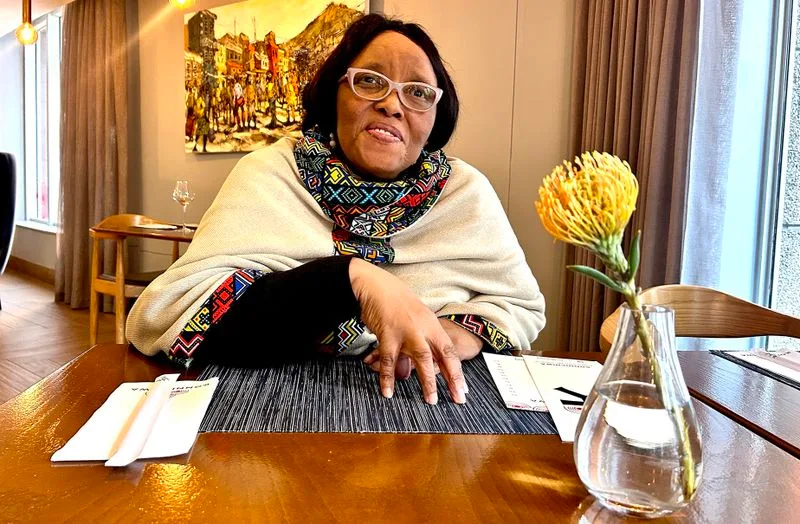
Precious Matsoso tells Spotlight how, over three decades, she helped shape some of the most consequential health policy negotiations in South Africa and in global governance. She also shares memories about her Soweto childhood filled with music, science and political uprisings.
Leading negotiations on the world’s first pandemic treaty, South African health policy trailblazer Precious Matsoso dealt with “occasional adversarial and intense engagements” by bursting into song. In her melodious church voice, Matsoso sang All You Need Is Love by The Beatles, imparting a message of co-operation to delegates from 194 countries gathered in Geneva, the headquarters of the World Health Organization (WHO).
She recalls: “It was very funny because a Brazilian delegate was saying, ‘Why are we treating each other like this?’ And that’s when I sang that song.” There was also a moment, she says, where she sang the theme song of the movie Mission Impossible.
After 30 years of negotiating health policy on national and global levels, Matsoso says: “When elephants fight, the grass suffers. Here, patients suffer.” She is referring to vulnerable sick people slipping between the cracks, with life-and-death stakes, as health sector stakeholders clash.
Following her three-year tenure as co-chairperson of the International Negotiating Body for the WHO Pandemic Agreement, earlier this year TIME magazine named Matsoso on both its TIME 100 Health 2026 and 100 Most Influential People in the World 2026 lists.
In her acceptance speech , Matsoso distilled the aim of the pandemic treaty as “a collective refusal to repeat the devastation and inequities we witnessed during Covid-19”.
Driven by the memory of how African countries were pushed to the back of the queue for diagnostics, protective equipment and medicine during Covid-19, the deliberations saw her speak up for equitable access to (and local manufacturing of) pandemic-related health products.
In her speech following the TIME accolades, she added: “[The world] had vaccines in just under a year, an unprecedented achievement in research and development. But half the world, notably Africa, lacked access to diagnostics, therapeutics, and vaccines. That was not an accident. That system was designed for charity after the fact, not equity from the start.”
The pandemic treaty was adopted in May 2025 with a working group still drafting final aspects such as an annex on “pathogen access and benefit sharing”. According to a WHO statement in July, this is “a system that enables the rapid sharing of pathogens with pandemic potential while ensuring the fair and equitable sharing of benefits arising from their use, including pandemic vaccines, diagnostics, and therapeutics”.
5News aggregated this summary from the outlet’s public feed. The full article, with all the context, is on www.dailymaverick.co.za — the content belongs to Daily Maverick.