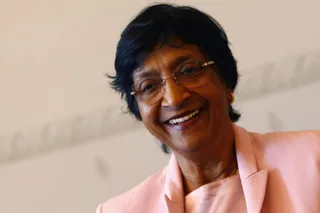
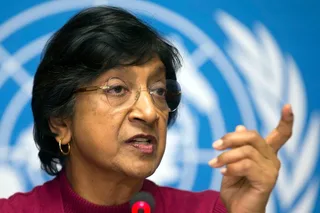
Navi Pillay’s Nobel peace prize is a vote of confidence in a global legal order under fire

The awarding of the 2026 Nobel Peace Prize to distinguished South African jurist and international judge Navanethem “Navi” Pillay is about more than just the recognition of an exceptional individual in the global fight for justice.
It’s clear that the prize also speaks to a bigger context.
It comes at a time of pressure on and the questioning of the international legal order.
Pillay’s recognition affirms the conviction that international law, however imperfectly applied, remains indispensable to a peaceful world.
Making history It is a proud moment for South Africa.
She becomes the fifth South African to receive this honour, following resistance leader Chief Albert Luthuli in 1960, religious leader and activist Archbishop Desmond Tutu in 1984, and former presidents Nelson Mandela and FW de Klerk in 1993.
She is the first South African woman to receive the peace award.
Her prize is a further break with its historical tendency to mostly honour “highly educated white men from Europe and the US”.
Similar to her South African predecessors, the struggle against apartheid and white minority rule features as a crucial element of her contribution.
However, there is an important difference.
While Mandela became a global symbol of reconciliation, Pillay took the lessons of South Africa’s struggle into the international arena.
There she became leader and institution builder in her own right.
She had the daunting task of being one of the very first international judges responsible for forging into being international institutions intended to ensure that those responsible for the gravest human rights violations are held accountable.
She was on the first bench of judges of both the International Criminal Tribunal for Rwanda , established by the United Nations (UN) following the 1994 genocide in Rwanda, and the International Criminal Court (ICC) from 2003 to 2008.
5News aggregated this summary from the outlet’s public feed. The full article, with all the context, is on theconversation.com — the content belongs to The Conversation Africa.